[Mentor Text Monday] Paragraphs

For my latest mentor text discussion, I am going to study how authors create paragraphs. Based on my recent posts on writing (Fear & Formulas) and discussions with friends and colleagues, I wanted to explore the idea of what a paragraph looks like in various nonfiction texts.

  1. The Art of Coaching by Elena Aguilar

On page 55 Aguilar begins a new section with a short paragraph:

“Understanding adult learning is essential to effective coaching. Many of the ways in which adults and children learn are similar, but there are also some critical ways in which we learn differently, and the conditions for our learning need to be modified in order to support us.”

This is a two-sentence paragraph. It is followed by a paragraph with eight very long sentences. Aguilar is a writer who enjoys commas and long, descriptive, full sentences. But the length of a paragraph depends on the context. She writes in a conversational tone as though she is giving advice over coffee.

2. Making Thinking Visible: How to Promote Engagement, Understanding, and Independence for All Learners by Ron Ritchhart, Mark Church, and Karin Morrison

When I opened up this book to page 8, my current book mark, I looked at the first paragraph of the new section entitled “Beyond memorization, work, and activity”. I’m not even going to copy out this paragraph- it is huge! There are eight sentences in this paragraph, along with three citations and two acronyms. These authors, in this dense, academic text, pack a lot of information into each paragraph. The context is about building historical understanding and background knowledge to make the points that will follow clear and meaningful.

However, what they also do, to break up these paragraphs, is insert large quotes and bulleted lists. These not only physically break up the text, but give the reader an anchor on which to rest, to reflect, while reading.

3. “Rough Forecasts” by Elizabeth Kolbert, The New Yorker

For another text, I decided to move away from my bookcase/ comfort zone and look outside of education. This article is from a regular writer for the Comment section of The New Yorker. There are a total of eight paragraphs in her entire article. What fascinates me the most are the first and last paragraph. The first paragraph is long and includes some very specific details, yet clearly sets up the context of the article. The last paragraph is short- two sentences- and is a clear conclusion to the topic at hand. Each paragraph in between adds historical and relevant details to inform the reader about the topic. The writer’s voice is evident throughout the piece.

4. “Debunking the Myth of the 10,000 Hours Rule: What it Actually Takes to Reach Genius-Level Excellence” by Maria Popova

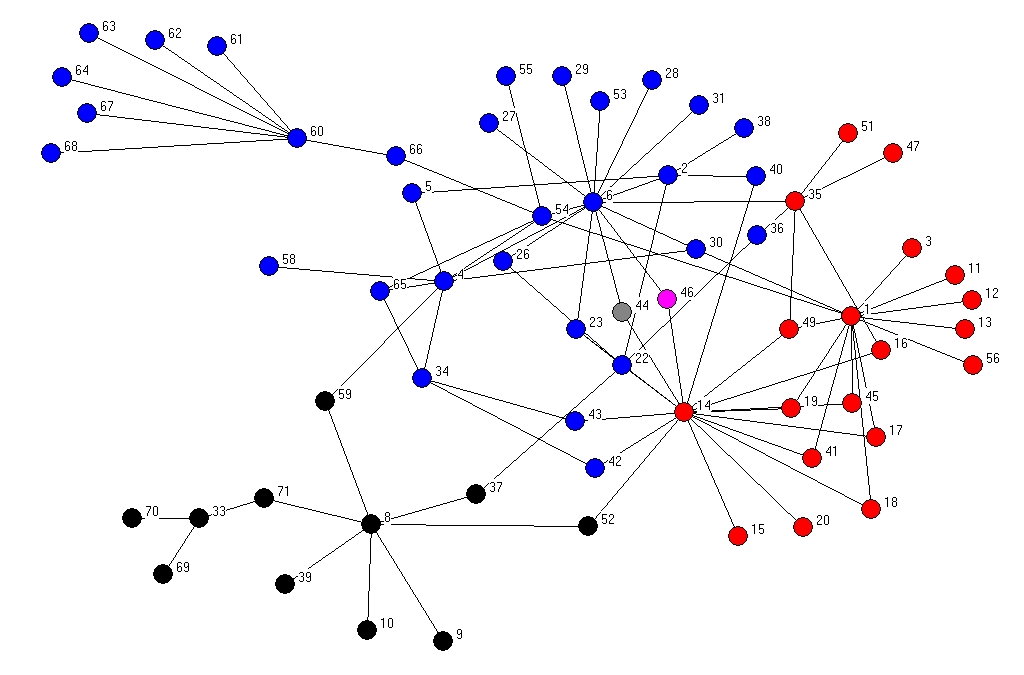
What I love about this text is how real it is. This is both a summary and a review of a book, told through quotes and pictures and words. The writer of the text, Popova, uses one-sentence paragraphs as well as longer paragraphs (such as the first one) filled with dashes.

CCC licensed work by Wikimedia

CCC licensed work by Wikimedia

When I think about writing paragraphs in nonfiction texts, I come back to purpose. The context of your writing should determine the structure you, as a writer, create to tell your story.

In no way could I put each of these examples into one common structure; nor if I followed one formula would I end up with anything similar to these diverse texts.

As I continue to reflect on the teaching of writing, as an art, not a formula, I think of how valuable this activity could be for teachers. Just as mentor texts can be used to help students find new ways to explore their use of language, they can also be used to redefine our definitions and expectations.

Posted in Mentor Text Monday | Tagged , , , , , , | 3 Comments

[Abecedary of Reflection] Metacognition

M: Metacognition

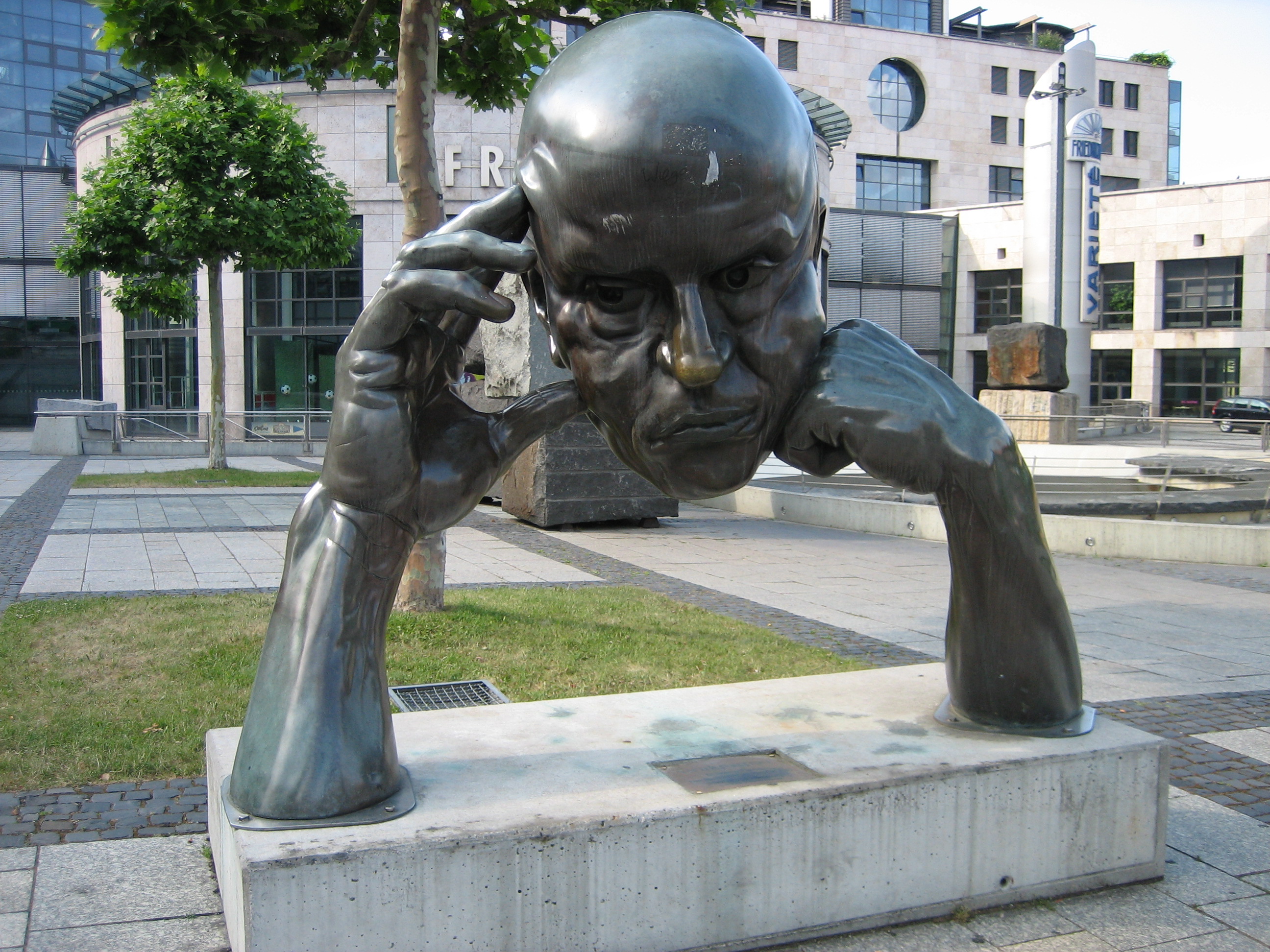
Metacognition- thinking about one’s own thinking

CCC licensed work: Stuttgart Friedrichsbau Denkpartner.jpg

CCC licensed work: Stuttgart Friedrichsbau Denkpartner.jpg

Thinking about one’s own thinking improves performance and the ability to work independently. The ability to stand back and observe one’s own though process is an important skill of effective learners.” – One of the 12 principles of knowledge acquisition by Owen et al. (1994) as quoted in Leading Every Day.

Metacognition shows up a lot in my life.

  • One of my best friends, who is a teacher, spent the beginning of this school year implementing a metacognition journal with her seventh graders. We had many conversations about what she did to help her students reflect on their own thinking as learners.
  • Our district has spent the last two years studying the principles of Strategies That Work and The Comprehension Toolkit by Stephanie Harvey and Anne Goudvis. The principles are research-based strategies that good readers do naturally when comprehending complex texts. Teaching the strategies is all about breaking down the reading process with explicit modeling for students to “see” what goes on inside the heads of good readers.
  • My reflective practices are often about my thoughts about my thinking.
CCC licensed work http://openclipart.org/

CCC licensed work http://openclipart.org/

We can only truly think about our own thinking if we take the time. This reminds me of what I read about meditation. While meditation is NOT a habit I have developed, it is something I strive towards in the future. Both meditation and metacognition require we slow down our mind (deep breathing helps!) long enough to see the thoughts whizzing by. I am a better metacognitioner (is that a word?!) than I am a meditator, but they are both skills I hope to enhance.

Reflective questions to consider:

  • How do you support your metacognition?
  • How do you support the metacognition of teachers and students?
  • Why is it important to think about our own thinking?
  • Do you have any tips for my future mediation practice?

Abecedary of Reflection

Posted in Reflection | Tagged , , , , , , | Leave a comment

Formulas for Writing?

After reading my post about the fear some teachers have of writing, one of my best friends told me she was very upset. As a middle school English teacher, she agreed with my notion that many teachers, especially non-English teachers at the secondary level, have a fear of writing. We discussed how the implementation of Common Core State Standards is making all teachers more aware of the role literacy plays in all content areas and that is a big shift.

But it was this line from my original post that upset her:

“Most of us were taught to write using formulaic structures, such as the dreaded five paragraph essay, that have little to no significance in our adult lives.”

She wholeheartedly disagreed with my opinion that the five paragraph essay, or formulaic writing in general, should not be what we teach students. We had a debate and agreed to disagree (so that we could enjoy a peaceful lunch together!). I am still thinking about her words, however, and I’m sure she is still thinking about mine.

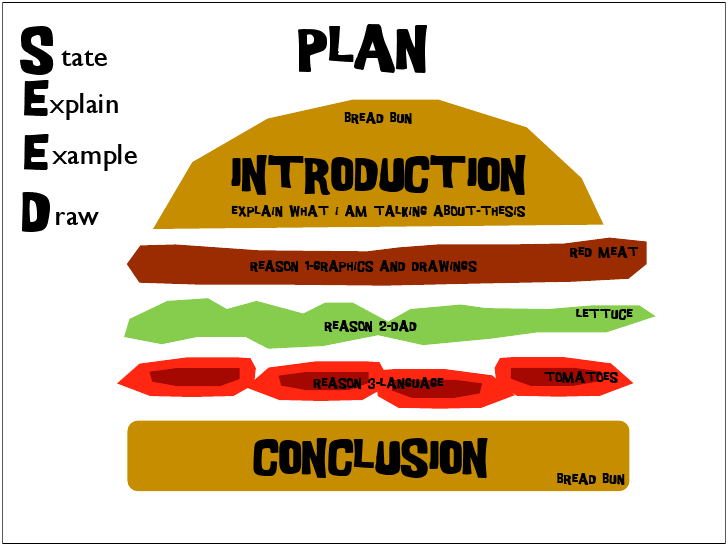
My first thought this morning was that I would do a Mentor Text Monday post that pulls out examples of real, nonfiction writing that does not follow the typical hamburger model paragraph. I am going to do that, but not right now!

My next thought was that if my friend, an experienced teacher who is a voracious reader and a strong teacher who cares about kids, feels this way, there are probably many more teachers who feel this way about writing. So not only do we have a community of teachers who may fear writing, but we also have a community of teachers who believe that kids need to learn formulas and structures of writing in order to write.

My third thought went back to this: When, as an adult, do I read or write formulaic texts? I do not read anything like that, because it would bore me and I would put it down! I do not write like that, and haven’t since I was in college. Yes, I was taught the formula of:

  1. Write an introduction in which I tell my reader what I’m going to say in a list with commas
  2. Write body paragraphs, each one telling about one thing I said I was going to say from the list in #1
  3. Write a conclusion that tells the reader what I just told them, listing the items in backwards order from the way I listed them in #1

This formula got me through high school and some of my college writing. This formula was what I taught my students during my first few years of teaching, as so many of us have done. However, once I attended the Columbia University Teacher’s College Reading and Writing Summer Institutes, I was forever a changed reader, writer, and teacher.

Hearing Lucy Calkins herself talk about the power of literacy, of a community of readers and writers, was inspiring. Participating in a week focused on my readerly life followed by a week to develop my writerly life was a life-changing experience. I am forever grateful to my principal who found the funds to support my partner teacher and I in attending these workshops. I realize that not every teacher is afforded this incredible opportunity. But that does not, and should not, mean that the face of writing instruction cannot change.

As I read the ten writing standards outlined by the Common Core State Standards, I see the phrase “multi-paragraph”, but I do not see formula or structure. I see the phrase,       “… appropriate to task, purpose, and audience” in College and Career Readiness Anchor Standard #4.

When I looked up the SAT Scoring Guide for the writing portion of the SAT (this didn’t even exist when I took the SAT MANY years ago!), I found that to receive the highest score possible, a six, a student must do the following:

  • Effectively and insightfully develop a point of view on the issue and demonstrate outstanding critical thinking, using clearly appropriate examples, reasons and other evidence to support its position
  • Is well organized and clearly focused, demonstrating clear coherence and smooth progression of ideas
  • Exhibit skillful use of language, using a varied, accurate and apt vocabulary
  • Demonstrate meaningful variety in sentence structure
  • Is free of most errors in grammar, usage and mechanics

However, the SAT will no longer be using this measure. Some critics say that in such a short time period, students were able to use big words and a simple formula to achieve a high score without writing anything worthwhile. NPR addressed this here. Thank you to my friend and colleague Barb, who shared this tidbit with me and will, hopefully, add her own thoughts on this topic to her blog soon.

To compare, I looked up the ACT Writing scoring guide and found that they have a 12-point rubric in which students are expected to:

  • Express Judgment
  • Focus on a Topic
  • Develop a Position
  • Organize Ideas (in which they do call out an introduction and conclusion)
  • Use Language (to communicate ideas)

Nowhere do I see the idea that a student must follow one particular structure or formula. Nowhere does it outline that a student would be penalized if he or she wrote a one-sentence paragraph, followed by a six-sentence paragraph, followed by some other length paragraph.

What I also don’t see is an acknowledgment of the fact that we write for a purpose.   Writing for a “test” is not an authentic purpose.

Where are we getting the idea that our students cannot be successful in life if we don’t teach them a formula or structure for writing?

When I saw Dr. Tony Wagner speak at the ASCD conference in Los Angeles last month, he discussed how schools are preparing students to be, at best, college students, but not successful adults outside of college. No matter your career choice, the writing we do as adults does not mirror the writing we ask students to do in classrooms all across America. I believe this needs to change.

Writing is a form of communication. Communication is not always simple and neat. It definitely does not always follow a common structure or formula. But when someone is an adept communicator, you know it, you feel it, you sense it, you see it. My hope for our students, and our future, is that we are teaching students to communicate in authentic, purposeful, meaningful ways.

CC licensed photos and the International Olympic Committee. Mike Linksvayer, October 12th, 2009. Weezie's Birthday Ballooning by Richard Giles / CC BY-SA

CC licensed photos and the International Olympic Committee. Mike Linksvayer, October 12th, 2009. Weezie’s Birthday Ballooning by Richard Giles / CC BY-SA

  • What are your thoughts about writing formulas and structures?
  • What type of writing do you do as an adult outside of school?
Posted in Writing | Tagged , , , , , , , | 4 Comments

Fear of Writing

Lately I have seen versions of this phrase used over and over again (mostly in Slice of Life blogs!):

In order to be a teacher of writing, one must be a writer. 

While I was unable to participate in the SOL monthly challenge, I love the fact that so many educators came together to share their own writing publicly. I love writing and I agree wholeheartedly in the belief that good writing teachers consider themselves writers, just as reading teachers are readers. And I believe that every teacher, regardless of their content or students’ ages, are teachers of reading and writing (and speaking and listening!).

So why doesn’t every teacher have a blog? Why aren’t there more teachers sharing what they read and write with students and colleagues? I believe that many teachers have a fear of writing.

Most of us were taught to write using formulaic structures, such as the dreaded five paragraph essay, that have little to no significance in our adult lives. Or we were forced to write poetry or irrelevant texts using very specific structures or in response to teacher-created prompts. The writing I did as a young student does NOT resemble anything I do now as a professional, a doctoral student, or for fun.

I had the amazing experience of attending the Teachers’ College Reading and Writing summer workshop as a teacher with a friend and colleague many years ago. We were recently reminiscing about the experience and wondering how we might view writing today if we hadn’t had that opportunity. As leaders and learners, we both realized that we would have still come to a different understanding about the nature of teaching writing even without the experience, but we were lucky not to have to go through that struggle on our own. Ever since that time, I have kept my own reading and writing journals. As a teacher and coach, I shared what I was reading and writing with my students and the teachers with whom I worked. As a leader now, I share through twitter, this blog, email, newsletters, and in our own workshops.

But how often do most teachers have opportunities to share their own reading and writing? What can we do to ease the anxiety so many people feel about writing? How can we support our colleagues so that they, too, consider themselves writers?

This year I wanted the coaches in my district to gain experience with both Twitter and blogging. I created opportunities for the coaches to participate in a very structured, guided, supported Twitter chat and a blog-writing workshop, to help them in this process. With support, they were each able to experience first-hand participation in a Twitter chat and with writing their own blog post. I am happy to say that the twitter chats have continued monthly since that first experience. The blogging, however, was a one time deal for many of the participants. It is my hope that our coaches, just like our teachers and students, see themselves as writers with something to contribute.

  • What have you written lately?
  • How are you contributing to the world as a writer?


Posted in Writing | Tagged , , , , , , , , | 7 Comments

[Abecedary of Reflection] Listening

L: Listening

 Flickr photo by Ky Olsen used under creative commons license.

Flickr photo by Ky Olsen used under creative commons license.

The more I read on coaching and leading, the more I reflect on the importance of listening. Listening is an art. An art that requires active participation and concentration. In the past, I have worked with leaders who spent far too much time talking at people without ever listening to what others had to share. I have also worked with coaches who felt that the best way to coach or support a teacher, was to tell them what to do.

Listening plays such a critical role in building trusting relationships, especially during times of change. The best coaching and leading takes place when such relationships exists as the foundation of an organization. “Listening skillfully and well to people as they react to change can help them move through their grief reactions and can be a powerful way to build trust in the midst of change, ” writes Megan Tschannen-Moran in Trust Matters: Leadership for Successful Schools (2004,p. 171)

CCC licensed work by Creator: Imelda Bickham

CCC licensed work by Creator: Imelda Bickham

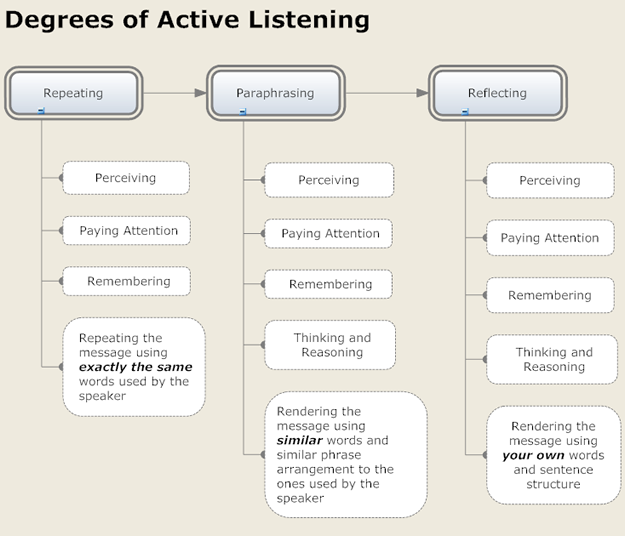
I found the above image in a simple search for images of “listening”. I like the differences spelled out between repeating, paraphrasing, and reflecting. Since this abecedary is driven by reflection, I tried to render a message about each word above using my own words to capture the essence. Listening is not just about hearing the words someone else says, but responding in a way that acknowledges the meaning behind the spoken words. Active listening requires thinking, processing, and responding through meaningful exchanges.

Jim Knight’s book Better Conversations goes into great detail on the importance of listening in a coaching relationship.

Reflective questions to consider:

  • How well do you listen?
  • How have you developed the skills of an effective listener?
  • How important is listening to your learning and/or leadership?

Abecedary of Reflection

Posted in Learning | Tagged , , , , , , , | 2 Comments

[Mentor Text Monday] Quotes

My mentor text posts have been missing for quite a while. Those pesky research articles don’t lend themselves as mentor texts for creative writing… usually! However, one of my recent research reads (unplanned alliteration!) had some quotations that stood out powerfully to me as a writer. I thought I would use the quotes as mentor texts for some writing of my own. Here goes…

Mentor Text: Reflective Practice for Educators: Professional Development to Improve Student Learning by Karen F. Osterman & Robert B. Kottkamp

Quote #1: “People learn how to behave by watching others… The norm of silence prohibits sharing critical information about self as well as others” (p. 68).

Quote #2: “The pattern of withholding particularly applies when information might create conflict or hurt others” (p. 67).

Quote #3: “Organizations exert a powerful influence on human behavior, and people comply with expectations and maintain a conspiracy of silence about troublesome matters” (p. 66).

CCC licensed by GollyGforceCCC licensed by GollyGforce

In schools that live by a code of silence, there are students who are disenfranchised, under-served, ignored. When there is a pattern of withholding, whether that which is withheld is money, time, expertise, or support, someone is failed.  If that someone is a student, it should be a crime. If an organization has a conspiracy of silence, racism can become institutionalized. If leaders allow the norm of silence in our educational system to continue, the achievement gap will not close.

However, if we instead create systems of social justice with patterns of provisions for all, students will succeed. If leaders support a norm of collaboration, with active listening and dialogue, how much more can we achieve? Closing the achievement gap requires us to acknowledge the poverty gap and the lack of cultural proficiency, and to ensure that social justice leadership prevails.


  • Have you ever been touched by a single quote?
  • What do the quotes above make you think of?


Posted in Mentor Text Monday | Tagged , , , , , , , , | 1 Comment

What I’m Reading (Volume 3)

I love reading. I also love writing. I enjoy discussing what I read with friends and colleagues. I am not so much a fan of reading 50 page research articles for the purpose of doctoral research. Sometimes it is fun to stop and think about the non-research books I read along the way.

Volume 1

Volume 2

Making Thinking Visible: How to Promote Engagement, Understanding, and Independence for ALL Learners by Ron Ritchhart, Mark Church & Karin Morrison

During a recent Things I’m Loving post, I mentioned the anticipation I was feeling about an upcoming book club with my colleagues. This is the book we are reading together. I was hooked from the first page when the authors said, “Oxford English Dictionary rates the word think as the twelfth most used verb in the English language!”

Common Core English Language Arts in a PLC at Work: Leader’s Guide by Douglas Fisher, Nancy Frey, & Cynthia Uline and Common Core English Language Arts in a PLC at Work: Grades 3-5 by Fisher & Frey

I read the leader’s guide last year and am now using it as a reference while facilitating a book club using the 3-5 edition. The book club is with a group of aspiring leaders in their administrative credential program, in a leadership course. I serve as the facilitator as part of one of my doctoral classes. The experience is meant to support my cohort with a professional development experience in a format other than the traditional “sit and get” delivery style of PD. I have some advantages because a) my district is well ahead of the curve when it comes to CCSS implementation, b) I have facilitated a wide variety of professional development opportunities throughout my career, and c) I participate in unique professional learning experiences through twitter and other social media venues.

One of my favorite quotes: “In other words, teachers need to plan together, look at student work together, identify needs for reteaching together, trust one another, and ask for help when they need it” (Fisher & Frey, p. 9)

Reflective Practice for Educators: Professional Development to Improve Student Learning by Karen F. Osterman & Robert B. Kottkamp

I began reading this book as part of the research for my dissertation’s review of literature on adult learning. I will continue to read it for my own edification. Reflection is an important part of my own learning process and my blogging (see my Abecedary of Reflection for my MANY thoughts on the topic!).  Osterman and Kottkamp spell out the differences between reflection and reflective practice that can lead to significant school reform. A favorite line: “In reflective practice, the learning goal is not merely acquiring knowledge but creating and applying knowledge in effective and appropriate ways. Specifically, the purpose of reflective practice is the improvement of professional practice through behavioral change” (p. 15).


CCC licensed work by flickr user CollegeDegree360

CCC licensed work by flickr user CollegeDegree360


What are you reading these days?

Have you read any of these books?

Do you have any good books to recommend to fellow learners and leaders?


Posted in Learning | Tagged , , , , , , , | 5 Comments

Linked Learning

Guest Post

Today I am honored to host a guest post by my friend and colleague Sheila Krotz. Sheila is a secondary school leader (and fellow doctoral student) whose expertise includes the area of Linked Learning. You can find her on twitter at @JoyfulDiva. “What is Linked Learning?”, you may be asking.  Read on for some great information.

What is Linked Learning?

Linked Learning are programs of study that connect learning in the classroom with real-world applications outside of school. The Linked Learning approach is designed to address inequities in education and achieves its goal through four key components:

(1) a college-preparatory curriculum,

(2) a coherent sequence of rigorous career-related coursework,

(3) work-based learning experiences, and

(4) student support services.


CCC licensed work by Hillary411k

CCC licensed work by Hillary411k

What Linked Learning is not-

Linked Learning is not a type of school, but it is an approach to teaching and learning that can be implemented through several different high school models, including small learning communities; career academies; charter schools; and small, themed high schools in traditional school districts.

In the Linked Learning approach, high school courses of study connect learning in the classroom with real world applications. The programs integrate strong academic instruction with demanding technical curriculum and field based experiences that prepare students for a full range of post-secondary education options.


  • What experience have you had with Linked Learning?
  • What else would you like to know about Linked Learning?
Posted in Learning | Tagged , , , , | 1 Comment

Things I’m Loving Friday, Volume 3

This is my leadership and learning spin on a popular post (here and here). Volume One can be found here with Volume two nearby.

Things I’m Loving Right Now:

  • Math Work:  I never thought I would ever type those words on a happy list, but here I am! After four days of intensive work around our planned implementation of the Math Common Core State Standards, I am loving math! Actually, I am loving all of my hard-working colleagues who spend time over their Spring Break to craft Math Units of Study for next year for our entire district. There was amazing learning and collaboration going on and it will continue this spring as units are finalized and prepared for publication.
  • ASCD14 Reflections:  After attending the ASCD annual conference this year, I find it fascinating to read the reflections written by other participants. I wrote my own reflection by capturing some key tweets from the weekend here. It is great to read about the conference from other people’s perspectives.
  • Anticipation:  Right now, I am on the verge of a week off. I am anticipating a little bit of relaxing and a LOT of work on my dissertation. I am also anticipating my future participation in a new book club facilitated by one of my colleagues. In order to ensure we all read and make time to discuss a new professional book, we have committed to a book club and I am looking forward to our discussions.
  • bai5 Antioxidant Infusions Molokai Coconut water:  This is NOTHING to do with leading or learning, but I thought I would share it for fun! Thanks to my friend Sheila, I am LOVING this coconut flavored water and I rejoice every time one of us finds it in a store.
CCC licensed work by Robert Wetzlmayr

CCC licensed work by Robert Wetzlmayr


  • What are you loving right now?
  • Have you tried any great coconut flavored water?


Posted in Learning | Tagged , , , , , , , , | 5 Comments

[Abecedary of Reflection] Knowledge

[Abecedary of Reflection] K: Knowledge

CCC licensed work by Tim Green on flickr.com

CCC licensed work by Tim Green on flickr.com

How do you acquire knowledge? Do you know what kind of a learner you are? Do you learn best by listening, viewing, reading, or writing? When it comes to knowledge, do you have a growth mindset or a fixed mindset (Dr. Carol Dweck’s book mindset is one of my favorites!)?

“The goal of the educator is not simply to absorb externally developed information but to use knowledge to develop understanding and competence.” – Osterman & Kottkamp, 2004, p. 19.

As I reflect on knowledge, I know that I believe strongly in the growth mindset, for student learners and adult learners. I have a passion for learning and I consider myself, as a coach and a leader, to be a facilitator of learning and knowledge acquisition.  

For educators (and students) with a fixed mindset, I think that knowledge is a fixed point, and failure is still a negative term. If we want to make changes to our system, we need to see failures as missteps on the way to new knowledge, as part of the learning journey, as natural and to be expected… which contribute to a growth mindset.  

Dimmock and Walker (2005) cite research that compares the American and Asian education systems. One of the key differences is the growth mindset that children, parents, and educators have in Asian cultures, as opposed to the fixed mindset cultivated in American homes and schools. How can we share this important knowledge with our colleagues making important decisions about American schools?  

Reflective questions to consider:

  • Have you read mindset?
  • How are you making changing within your organization to enhance the learning of all student and adult learners?
  • When you read the word knowledge, what comes to mind?

Abecedary of Reflection

Posted in Learning | Tagged , , , , , | 2 Comments