July Reading Update

During the last two weeks of July, I was on vacation in South Africa. I LOVED my vacation and the safari experiences, but there was little time for reading.  This month’s recap is later and shorter than normal!

  1. Coherence: The Right Drivers in Action for Schools, Districts, and Systems by Michael Fullan and Joanne Quinn – Based on Fullan’s article “Choosing the Wrong Drivers for Whole System Reform,” which I first read in my doctoral program, this book puts the right drivers into a framework that is actionable for educational leaders. I really appreciated the systems-thinking this framework takes. So many educational entities lack systems-thinking, and true coherence. This books offers some concrete ideas to move an organization forward strategically.
  2. Personal by Lee Child- This was another Jack Reacher classic that I read while on a LONG plane ride.
  3. The Storied Life of A.J. Fikry by Gabrielle Zevin – My aunt recommended this book to me and I’m glad I read it. It was a very unusual story, and it actually reminded me of a book I read awhile back (A Man Called Ove). The protagonist was not exactly likable, but due to circumstances beyond his belief, he  became the adopted father to a young baby. That event changed the course of his life, for the better. I loved that he was a small-town bookstore owner!
  4. Here’s to Us by Elin Hilderbrand – This was on some “summer beach read” list and that’s exactly what it’s good for! It was a predictable story about the three ex-wives of a man who had just passed away, and their story to forgiveness, for themselves and their children, and their shared history.

This makes my 2016 total to 48. 

What are you reading?
Any must-read recommendations for me this fall?

Posted in Reflection | Tagged , , , | 1 Comment

Things I’m Loving Friday, Volume 18

I haven’t published a volume of Things I’m Loving Friday in a LONG time. I often struggle to find new resources to share that are leadership and/or learning-focused.

  • More Perfect Podcast by RadioLab – I wrote about loving podcasts in Volume 14. I didn’t mention RadioLab, but it became one of the random podcasts I enjoy (outside of my continued addiction to the Adnan Syad story started on Serial). RadioLab recently launched a spinoff that focused on the Supreme Court and key legal cases affecting Americans. More Perfect is a fascinating look into legal proceedings at the highest court in our nation, and the positive and negative ramifications of major cases. It’s great for me, as a citizen and non-lawyer-type person, to know more specifics about the work of our Supreme Court, the history of the power of the rulings, and the future of some social issues that may affect schools.
  •  Meditation – I began to build a habit for meditation during my year of mindfulness. However, I let that habit slide this year. I’ve recently begun to meditate for at least 5 minutes every morning. Almost immediately, I noticed a change in my day- I felt happier, less negative, overall. I felt more peaceful, and less annoyed by the daily irritations that usually bother me. This simple 5 minute habit is bringing a positive outcome to my professional life, which I greatly appreciate. I use a variety of apps for guided meditation, but if you want a not-safe-for-work, funny, sarcastic guided meditation, check out the Honest Meditation app!

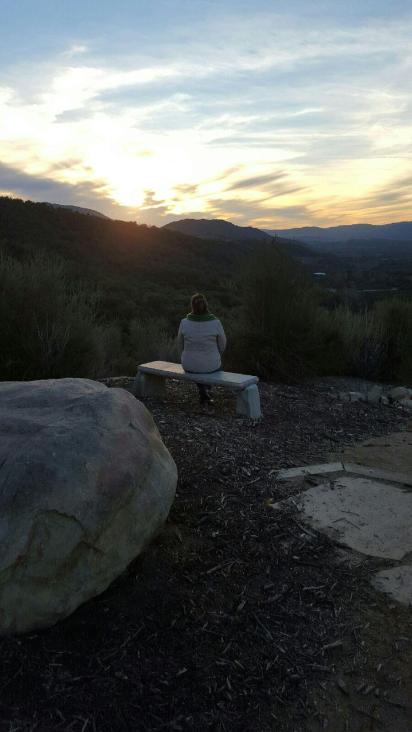
Reflecting on the Ojai sunset

What are you loving lately? 


Posted in Reflection | Tagged , , | Leave a comment

Happy 4th Birthday Reflections!

Wow. I published my first blog post four years ago. 2012. I was in a different job, in a different district. I hadn’t begun my doctoral program yet. I was looking for ways to share my learning publicly for my own reflection as well as for the contribution to a greater learning community. And really I just love writing and was looking for an excuse to write more often!

mindfulness pic

Since my blog’s last birthday, I finished up my 2015 focus on mindfulness, captured what I’ve been reading, and began a year focused on rejuvinate. I asked my beautiful question and I changed jobs!

Rejuvenate 2016

As I prepare for a new school year to begin very soon (we are on a modified year-round schedule), I am hopeful that this blog will continue to serve as a reflective outlook for me as I learn, coach, and lead. I also hope that I continue to find new avenues to explore through my writing and reflecting. I am excited to launch a year of learning blog project in my district, where each day will feature a different writer from our community answering the question “What did you learn today?” This work is inspired by the work of other districts, and I only know about it because they had the courage to blog and share their writing with the world.

Thank you for reading my reflections and continuing to join me on this unknown journey.


Posted in Reflection | Tagged , , , , | 1 Comment

Black Lives Matter to Me

After the recent deaths of two MORE black men, Alton Sterling and Philando Castile, at the hands of police officers, and the sniper shootings of multiple Dallas police men, I am beyond saddened. I am sick to my stomach.

As a white middle class woman, I am more aware every day of the privileges I receive simply for the color of my skin. I have never been scared for my life when pulled over by a policeman (and it’s happened- I had quite the lead foot in my 20’s!). Never have I thought I was in danger living my day-to-day life. I always assumed I was safe and would be protected by safety officers. I grew up with this security. But so many people of color in America did not grow up with that same bubble of safety.

After reading this article about what white people can do to support the Black Lives Matter movement, I knew I was going to blog about my reflections. It’s time to stand up.

The advice in the article says that it is not the job of black people to educate white people about the issues, nor to convince them that Black Lives Matter. The people interviewed advised white people to step out of the shadows, literally and physically, to stand up to the police and the travesties that continue to plague the black community. This line, a quote from Robbie Clark an organizer with Black Lives Matter Bay Area, really resonated with me.

What we’re saying right now is that all lives will actually matter when black lives matter — and black lives don’t matter right now. So we need to say black lives matter to change that.

This week has been a devastation across our country. People are hurt, angry, scared, and lashing out. I’ve seen ugly comments on Facebook, Twitter, and Instagram from all sides of the issue.

I am not against police. I am against police brutality.

I am against institutional racism. We need to acknowledge that this exists and impacts decisions made, especially in crisis situations.

I am a proponent of cultural proficiency, where we all recognize that we are different, with different experiences that make us who we are. My white middle class experiences have created my beliefs and my inherent feelings of security. The first thing I can do is acknowledge that the experiences of non-white, non-middle class Americans are vastly different than my own. When non-white people, especially black men, are in situations with cops, they are more likely to be shot and killed than I am.

As an educator and a leader, this week has hit me at another level as well. The Black Lives Matter movement could just as easily be applied to the statistics in education about black students being qualified for Special Education services or being suspended or expelled in disproportionate numbers across our country. It could refer to the persistent achievement gap seen in too many schools, where students of color and from poverty score at significantly lower levels than most white students.

Today I am speaking up to be clear: Black Lives Matter to Me. Students of Color and students born into poverty matter to me. LGBTQ students matter to me. Any marginalized population that is hurting in our society may also be hurting in our schools. I am speaking up as a human being, a citizen of this country, but I am also speaking up as an educational leader.

We can no longer deny that institutional racism affects students in schools every day. We must confront this issue. The first step is to speak up, to get the dialogue started. So I am starting it. Will you participate? Will you speak up? How will you show that black lives matter to you too?


Posted in Reflection | Tagged , , , , , | Leave a comment

June Reading Update

Here are my reading experiences from this past month. This brings my 2016 total to 44. I read 44 in 2015, so I think I will be crushing that goal this year, for #read16in16.

  1. Never Go Back (#18) by Lee Child- After a few less-than-exciting books in May, I was ready go back to one of my favorite series for another installment. This one did not disappoint! Reacher finally met the woman he talked to a few books back. It was the usual fast-paced Reacher mystery.
  2. High Heat by Lee Child- This short story was a bonus in the e-book from #1. It’s the second Reacher story I’ve ready that is a prequel to all the main novels. I love reading about this character’s history, and what made him the man I know from the 18 novels I’ve read in the series. This one took place when he was 16 years old, which was so different from anything else in the series.
  3. The Art of Coaching Teams by Elena Aguilar – I loved Aguilar’s first book and couldn’t wait to start this one. I wasn’t disappointed. In fact, I wrote about my core values because of an activity from early in this book. This book is a must-read for educators, especially those in coaching and leadership positions. Aguilar’s advice and resources on emotional intelligence, building trust, and creating functional teams is transformative.
  4. A Snicker of Magic by Natalie Lloyd- I downloaded this book from Audible based on the amazing love shared on this post. I loved listening to this fanciful, fabulous, fun story! It was so sweet, with many lessons for readers of all ages. I love that the main character was a collector of words!
  5. When Hitler Stole the Pink Rabbit by Judith Kerr – One of my reading friends recommended this YA book to me and I’m so grateful. I didn’t know it was semi-autobiographical when I began reading it, but I enjoyed the history and the author’s perspective. This was such a unique tale about WWII and one family’s experience after leaving Germany before Hitler was elected. I really enjoyed reading this book!
  6. Revolution by Deborah Wiles – I’ve had this LARGE YA book sitting on my bookshelf for awhile. I’ve seen it on some must read lists. I was hesitant to pick it up because of the size and the fact that I’ve read so many books about the time period and the topic (the 60’s and civil rights). But this book is different. There is a collection of nonfiction pictures, excerpts from speeches and pamphlets, and realia throughout the realistic fiction chapters told from the perspectives of various characters. This is such an interesting book!                                                                                                  ypl_dwiles_revolution_f
  7. Launch: Using Design Thinking to Boost Creativity and Bring Out the Maker in Every Student by John Spencer and A.J. Juliani- When Shelley Burgess tells you she thinks you will like a book as she is giving you a copy, you read that book! And of course I enjoyed reading Launch! As I wrote in my post about breaking out of boxes, I was glad to connect the idea of design thinking to the inquiry work I led with a group of talented teachers in my previous district. I love anything that is student-centered and focused on their curiosities and desires for learning.
  8. The Classroom Chef: Sharpen Your Lessons, Season Your Classes, Make Math Meaningful by John Stevens and Matt Vaudrey – I picked this up after seeing Dave Burgess blog or tweet about how it’s not really about math instruction, but good instruction. While the cooking analogy got old for me, I enjoyed hearing the authors’ passion for engaging students shine through their storytelling.
Posted in Reflection | Tagged , , , , , , | Leave a comment

Even More Quotes That Resonate

When I read I annotate my books by underlining key words and phrases and making notes in the margins. Sometimes I underline a quote that I just can’t stop thinking about. Here is another post in my series of quotes that resonate.

“Routines create buckets for healthy emotional behaviors; they become a structural assurance that emotions will be attended to.”

~The Art of Coaching Teams by Elena Aguilar

This quote jumped off the page for me. The routines mentioned above relate back to creating  norms for teacher teams in order to build behaviors that lead to high emotional intelligence. But the routines could just as easily refer to those in a classroom of students. Students, just like educators in a team or PLC, need routines and structure in order to feel safe. They need their emotions attended to, just as adult learners do.

“The process of learning how to see without judging is a skill…”

“…practice does not improve in isolation”

~Leading for Instructional Improvement: How Successful Leaders Develop Teaching and Learning Expertise by Stephen Fink & Anneke Markholt

These excerpts come from chapter four, which is about observing in classrooms and facilitating learning walks with a clear purpose. I’ve worked with enough coaches and administrators to know that learning how to observe teaching and learning without judgments is a skill that takes time, effort, practice, and feedback. But none of our practice can improve in isolation. We all need trusted colleagues, peers who can provide us with feedback that will improve our leadership in order to  impact teaching and learning.

“Failure is a part of the process for innovative teachers. Each mistake is simply another iteration on the journey toward success.”

~Launch: Using Design Thinking to Boost Creativity and Bring Out the Maker in Every Student by John Spencer & A.J. Juliani

I love this quote! We need to redefine failure in order to be innovative and creative in our classrooms and schools. Failure is that “first attempt in learning” and it provides us feedback along the way.

“We do not really see through our eyes or hear through our ears, but through our beliefs.” ~Lisa Delpit (1995) quoted in The Art of Coaching by Elena Aguilar

I am rereading Aguilar’s first book in preparation for some work with our district mentors next month and this quote leapt off the page at me. Our beliefs drive everything we say and do, whether we realize it or not. Aguilar’s advice is what led me to craft my coaching beliefs and my core values and to make them public. This quote is an important reminder to know thyself and thy impact, as Hattie’s research tells us.

“As Darling-Hammond (2013) notes, ‘Peer learning among small groups of teachers was the most powerful predictor of improved student achievement over time ‘.” ~ Intentional and Targeted Teaching: A Framework for Teacher Growth and Leadership by Doug Fisher, Nancy Frey and Stefani Arzonetti Hite

This concept is mentioned multiple times in the first few chapters of the book- teachers collaborating together on their practice can change teaching and learning. PLCs are so valuable when the work is focused on teaching and learning. The continuum proposed by Fisher, Frey and Hite ends with teachers as leaders, being able to help their colleagues learn about key elements of intentional and targeted teaching (FIT). Everyone in education can be a leader. How are you leading? How are you supporting the leadership development of others?

  • What quotes have resonated with you lately?
  • What do you read (or view or listen to) for inspiration?

More Quotes That Resonate

Quotes That Resonate

Posted in Reflection | Tagged , , , , , , , , , , | 1 Comment

Breaking Out of the Boxes

I recently successful broke out of two Digital Breakout EDU games by myself!

Having succeeded in my mission, I reflected on why this matters.

  • These digital challenges were created by a colleague of mine who is very creative and is always pushing herself (and therefore others!) to be innovative and adventurous.I felt compelled to try at least one (especially before I agreed to go into a real-live breakout room with friends!).
  • When I first I tried one of the games, I was immediately frustrated and annoyed and I quit. Going back (to the easiest level possible) and succeeding built up my confidence. After completing the first game, I knew I could do more and I tried the next level. This reminded me of my fixed mindset painting experience.
  • I like earning badges as I explore the world of digital badges and micro-credentials!
  • I learned that my fast-paced nature was not helpful in this situation, even though when you play these with a group the goal is to finish and breakout as quickly as possible! My impatience caused me to make silly mistakes that I had to go back and fix in order to solve the puzzles.

But just like any other technology device, tool, app, or program, I have to wonder what the educational value of games like these are.

I can see the value of these tools in a classroom, especially with teams of students, to develop perseverance, risk-taking, and problem-solving. These are important life skills, especially when we want to help students develop into life-long learners who can tackle unknown problems as 21st Century thinkers.

I imagine that if a teacher has gamified his/her classroom, the class could break out of other challenges that were directly linked to the academic content of the class. Having read and enjoyed Explore Like a Pirate by Michael Matera, I see the value in using gamification to engage, inspire, and challenge students with new learning.

Design thinking was impressed upon me when I saw the documentary “Most Likely to Succeed“. The film was created to get people talking about what we can do differently in our schools. It highlights the project-based learning that takes place at High Tech High (here in San Diego), as well as some other unique schools across the country. The final products designed by students in the film were impressive, outstanding, and overwhelming. I left the film inspired to start conversations about what we want our high school graduates to know and be able to do by the time they leave us. However, I also left feeling unsure of how to begin, considering the staggering gap between most schools in America and those featured in the film.

As I read LAUNCH by John Spencer and A.J. Juliani, I am reflecting on the value of design thinking and inquiry-based learning at the classroom level. The LAUNCH cycle proposed by Spencer and Juliani is very similar to the inquiry process presented by Stephanie Harvey and Harvey Daniels in Comprehension and Collaboration. In my previous role, I worked with Studio teachers who were using Harvey’s inquiry process with their students, in a new and foreign-to-them pedagogical approach. The students designed final presentations and projects that answered their essential questions. All of the work was student-centered and driven by their own curiosities and interests. Without realizing it, I had lead a team of teachers and their students through design thinking! Making this connection brought down some of the anxiety I felt after seeing the film.

All of these experiences have taught me that I need to redefine creativity and design thinking and problem-solving. Just like so many other buzz words in education, we need to collaborate with our colleagues to come to a collective understanding of what these words- these concepts- mean to us, in our context. These words have fluid definitions and they shouldn’t live in boxes. Our teaching shouldn’t live in boxes. We need to break out of the boxes to enhance student learning. As leaders, I hope we inspire teachers to break out of the boxes our system has put them in so that they can be creative, inquiry-driven, student-centered and focused on learning that impacts students in meaningful ways.


boxes


Posted in Reflection | Tagged , , , , , , , , , , | 2 Comments

[Mentor Text Monday] Snapchat

snapchat

All the cool kids love Snapchat.

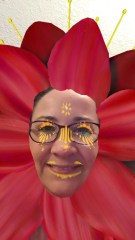
But what does this have to do with mentor texts and writing? Well, some of the coolest features on Snapchat are the daily filters. Each day there are a new set of filters you can use on pictures, most famously on selfies. Some filters paint over your face to look slightly smoother and younger and prettier, while other make your head explode. One filter made me excited for my South African safari later this summer and another scared me with memories of the old “Bodies” exhibit.

I could see students using these filters as story starters for writing. Just look at all the pictures below. What do they make you think of?


IMG_5369


IMG_5360


IMG_5508IMG_5507IMG_5506

IMG_5509


  • Fantasy stories about creatures with human and animal features
  • Fantasy stories where humans turn into animals or flowers
  • Biographies that highlight a person’s lifetime accomplishments as a saint, hero, or warrior
  • A memoir about a trip to Hawaii
  • Illustrated account of a vivid dream
  • A poem about the love of a pet
  • A cartoon or anime story inspired by a picture

Are you using Snapchat in your classroom?

How might these filters support students’ with independent writing? 

How can Snapchat help inspire creativity? 

Posted in Mentor Text Monday | Tagged , , , , , , | Leave a comment

Blogging Reflection

I recently rediscovered a Blogger account I have no memory of creating it (back in 2009!). It was my first attempt to make my writing practice public. I was very hesitant to say much and there is no record of my name or personal information linked anywhere (one more reason it was easy for me to completely forget it existed!).

After that, I began to go back to my first blog posts written here, back in 2012. I am rereading my posts to edit them (such as taking out the second space after each period!), to add links to relevant, more current posts, and as a reminder to myself. It’s been a fun journey to read the first thoughts I was willing to make public when I began this blog.

blogging

One idea that really stood out to me as I reread my former posts, was how I developed mindfulness habits before mindfulness became my focus word of 2015. It was clear that during my doctoral journey, I was stressed out and out of balance. I began seeking that balance and I believe that led me to choosing mindfulness as a focus. Many of the habits I developed as far back as 2013 are still with me today. I still maintain a professional leadership journal. I am still passionate about social justice and love what I wrote in this mentor text post!

It’s also been a sad journey in some ways. Some of the posts I wrote four year ago resonate as much today as they did back then. While it is nice to think I’ve put words out there that stand the test of time, it is disheartening when those words were reflecting on some necessary changes I hoped to see in education.

I could let this trip down memory lane put me into a depressed funk over the state of education today, or I can use it to fuel my current work. I blog because I have something to say and I want to interact with other educators around the world. If more educators were reflecting and blogging about their work, maybe the progress we’ve made over the last four years would be more evident. We still have a long way to go, but I am proud to be surrounded by many dedicated colleagues who are striving for equity for all students, more creative, interactive lessons that engage kids, more time for teachers to let their passions drive their instruction, and a greater focus on life after high school for all students.

If you have a blog of your own, I encourage you to go back to the beginning for some rereading and reflecting!

Posted in Reflection | Tagged , , , , | Leave a comment

Core Values

The Art of Coaching, by Elena Aguilar, is one of my favorite professional books. I have professed my respect for the work multiple times here on the blog. This month I finally began to read Aguilar’s newest book, The Art of Coaching Teams, which is just as incredible! This is an amazing resource for leaders.

art of coaching teams

Each chapter is rich with reflective questions and resources that help you consider your vision, your leadership style, and the purpose of your work. One activity I recently completed was about your core values. You can find the directions and the word list on Aguilar’s website.

The activity begins with you looking over a list of about 110 words. These words are not an exhaustive list of possible values, but it’s a great place to start. You are directed to circle ten values you feel are important to you. In my first read of the list, I circled 22 words. There were THAT MANY words that struck me during my first view of the list.

Since I overshot step one, I narrowed my initial list of 22 words down to 10. While this cut took some thought, it wasn’t too challenging. I was able to eliminate a few words that I associate more with my personal life than my professional life (though many overlap). However, the next step was to cross off five words, leaving me with a list of five values.

This step was painful. I hemmed and hawed a lot. Truthfully, I reflected on what I believe, how I act at work, how I hope to be perceived by others, and what drives me. Each of those five words was important to me as a learner and as a leader.

The next step was to narrow my list further down to only three words- the three most important values to me at this point in time. After more serious reflection (which was one of my top five words!), I decided on my final three values:

  • Equity
  • Making a Difference
  • Trust

The final step in this activity was to reflect on the process- what led me to this list.

As expected, it was hard to keep cutting words off my list. I cut off balance and mindfulness before the first cut, though those are both important words in my personal life (and they do support my work). But I was focused on my core values as a leader, an educator, a coach, a mentor, here in this current world. I knew that trust and equity would be on my final list; they are non-negotiables in my life. They would not have been on my list 12 years ago, but I was a younger, more naive leader 12 years ago, who didn’t know how critical trust was. I also was just learning about all the inequities in education and discovering the importance of social justice leadership.

The phrase making a difference stuck out to me. At first, I wasn’t even going to put it in my top 10. But I kept coming back to it. The more I thought about it, the more I realized that I am driven by the desire to make a difference- on behalf of students, teachers, staff, and other leaders. In my coaching and leading, I want to make a difference in the lives of other educators, so they impact students. The more I thought about it, the more important it became for me. So something that wasn’t even at the surface of my thoughts ended up in my top three after much reflection.
I found this activity to be a valuable reflective tool (and you know how much I love reflection!). I think this is something that all educators would benefit from. In The Art of Coaching Teams, Aguilar references this activity as an important one to consider when new team members are getting to know one another. So often in education we react based on our own beliefs, without taking time to listen to what drives others.
A team may end up with completely different lists of core values at the end of this activity, but they will be stronger for recognizing where their colleagues are coming from in all their future interactions. I’d love to hear what your top three core values are.
*May 2018 addendum: This post is one of my one-read posts of all times! I wrote this original Core Values post in 2016. I revisited my core values again in 2017 and wrote about them in Revisiting My Core Values.  This week I began reading Aguilar’s newest book, Onward, about emotional resilience, which is so important at this time in our world. I see a future core values post coming out in the future. Stay tuned!


Posted in Reflection | Tagged , , , , , , , , , | 10 Comments