Early Collections

When I was in elementary and middle school, I was a collector. I collected stickers, Strawberry Shortcake dolls, charms (on bracelets and necklaces), and pins (on my oh-so-cool 80’s jean jacket). I collected pigs (stuffed animals, glass figurines, and many other forms) and anything related to New Kids on the Block. I also collected book series, such as The Babysitter’s Club by Ann M. Martin.

2016_09_20_16_48_20

In high school I collected pictures – of my friends and family, and of my celebrity crushes from Teen Bop!  My reading tastes graduated to the diverse writings of Stephen King, Danielle Steele and V.C. Andrews.

2016_09_20_16_48_27

When I was in college I was a “collector” of hats (often off of boys at parties!) and journals and quotes. I still have stacks of journals that I filled up during those years.

As an adult I have gone through collections of decorative coasters, sunflowers, books, movies, music, clothes, Coach purses, shoes, and more. I have also gone through periods of cleaning and declutter where I vowed to stop collecting stuff forever.

Collections and hobbies are features of the imagination and important learning tools.”

Gillian Judson writes this, in “Tips for Imaginative Educators #9: Let Them Obsess”. I never thought about my collections or hobbies as part of my imagination, though it makes sense now. I have always been a writer and many of my early fictional writings included elements of these collections.

How do we tap into the obsessions of our students to spark their creativity? How can their imaginations drive learning?

As a teacher, I often incorporated the music and pop culture references my students loved to grab their attention and motivate them in new ways. Beside this making me the “cool teacher” at the time, I saw my students’ eyes light up when they connected the learning of our class with their own interests. I witnessed this learning joy again while working with teachers to plan inquiry projects for young students.

This idea of learners’ passions driving them reminds me of two ideas I think are critical in a classroom and in professional development: voice and choice.

It is so important for learners of all ages to have a voice and a choice in their own learning. The more we provide options and allow students to select their own learning paths, the more likely the students are to be engaged and self-directed and driven by a purpose behind our grade books or assignments.

I’m going to continue to think about my own early collections and how we, as educators, can tap into this idea with our student and adult learners. I’d love to hear your thoughts!


2015_12_29_18_46_22


Thank you to this BAM Radio blog post that inspired this post! 

Posted in reflection | Tagged , , , , , , , , | Leave a comment

A Moment of Gratitude

Research (Greater Good from UC Berkley and Dartmouth) tells us that reflecting on our gratitude has physical and mental benefits. After spending the last two weeks sad and angry, surrounded by negative messages in the news and social media feeds, I am taking a moment today, on Thanksgiving, to be grateful.

I am grateful for:

  • a job I love in a field I have been passionate about for over 30 years.
  • the freedom to express how I feel, to agree or disagree with others, and not fear for my own safety.
  • my friends, who make me laugh, keep me grounded, lift me up, and support me.
  • my family, whether near or far, and the time we are able to spend together.
  • technology and the ability to turn it on and off whenever I want to.
  • the ability to write. Writing is a reflective tool, a catharsis, and a passion that fuels me.
  • the means to travel whenever and wherever I want to.
  • a roof over my head, more than enough food on my plate, my basic health, and safety and security on a daily basis.


What are you grateful for today and always? 


Posted in reflection | Tagged , , | Leave a comment

How I’m Taking Action

This has been a rough week. I’ve experienced a range of emotions, from hope to sadness to anger to sickness to fear to confusion to helplessness. And I’m a straight, white middle class woman of privilege. I cannot even begin to imagine how other people, people whose life experiences differ vastly from mine, are feeling after this week.

But after a week of these mixed emotions, I’ve decided that it’s time to take action. Here are a few things I am doing to not only pull myself out of this despair, but also to hopefully make a positive contribution to our society. This article, that provided advice we can all take to be an ally for marginalized communities, sparked this post.

  • Get out of the echo chamber: I am working harder than ever to make sure that I do not remain in an echo chamber surrounded by others who say and do exactly what I say and do on a regular basis. I am reaching out to ensure I have more diversity in my Twitter feed, for my own educational purposes. That means I have started reading resources from many people with viewpoints significantly different than mine. I’ve also made sure to read information written by people from all walks of life, to continue to educate myself on the challenges faced by Americans who are not straight, white women like myself.
  • Refuse to stay silent: I credit this to not just the last week in our country, but also my age and leadership experiences. At this point in my life, I refuse to stay silent when I hear offensive, racist, bigoted, misogynistic, hate speech anywhere in my life. This does not mean that I plan to get into Facebook or Twitter wars with random strangers over ignorant comments posted anonymously. But it does mean that when I am interacting with people I know or work with or in personal situations in real life, I will not ignore hate speech or hateful actions. I will speak up. I will share my feelings.
  • How can I show my support for you? I recognize that my life experience cannot possibly make me able to empathize with what so many other Americans are going through right now, from anger to fear to terror for their safety and the lives of their loved ones. What I can do is ask others how I can show support for them. As the article linked above advised,  now is not the time for white people to stand up and try to take the lead on everything, but it is the time to show support. I recently had a conversation with an American friend of Middle Eastern descent who described situations he has encountered, with colleagues (who are educators, by the way), that were beyond horrifying and offensive to me. What I said to him was, “If I had been there, what would you have wanted me to say and do to show my support of you?” It led to a valuable conversation.
  • Contribute where I can: I, like so many others, do not have endless amounts of time to give to various causes. What I have done this week is make a financial contribution to the ACLU, because I believe in the work they do to protect the civil rights of Americans. There is a great quote about the ACLU in one of my favorite movies, An American President, that I was reminded of this week by a colleague (if you’ve never seen that movie, please go watch it ASAP!). I also made a donation to the Southern Poverty Law Center for the same reason. I also plan to educate myself on peaceful demonstrations, actions, and other local events that I might be able to participate in in the future.
  • Unplug and celebrate the positive: Of equal importance to the ideas listed above, I know for my own mental and physical well-being, it is equally important that I practice mindfulness and Rejuvenation. For me, that means unplugging from Social Media, practicing yoga and meditation, taking a walk outside in nature, and spending time with family and friends. That means enjoying music and movies and laughter and love.

These are just some of my reflections. What are you doing to make your corner of our world a more equitable place for everyone?

EDITED TO ADD:

  • Attending the Women’s March on Washington: On January 21, 2017 I will be marching in Washington along with many other Americans who want our new Administration to know that women’s rights matter; that women’s rights are human rights.  This is not a protest. This is a peaceful demonstration. I am honored to be able to attend such an uplifting event at a critical time in our history.
Posted in reflection | Tagged , , , , , | 6 Comments

October Reading Update

The best part of keeping a monthly/yearly reading log is that I can look back to see what books I’ve already read and when. I did this as an English teacher, as a model for my students, years ago. There is a large gap in between those years and when I began again in 2015.

This is annoying when I rediscover an author I used to love, like Harlan Coben, and I can’t remember which books I’ve read and which I haven’t. So the book I read this month by Coben was new to me and more of his books will appear on future lists too!

  1. Fool Me Once by Harlan Coben-Fun mystery read about Maya, ex-military, now grieving widower, with a number of twists (some surprising and some not-so-much). I wasn’t a fan of the ending, but I appreciate how the author wrapped up key story lines.
  2. Deep Thoughts from a Hollywood Blonde by Jennie Garth- Another in my series of audio books read by their celebrity authors. I enjoyed getting to know the background and personal stories from Jennie, as I really only ever think of her as Kelly Taylor from 90210.
  3. Find Me by Lisa Gardner – This was a great, scary, psychological thriller! It’s horrifying to read about the effects a long-term kidnapping can have on the victim. After finishing the book, I realized there is at least one other book by this author with the detective character, D.D. Now I want to go back and read it!
  4. Alone by Lisa Gardner – As mentioned above, I decided to go back to the beginning of the Gardner series with D.D., the detective. This was ANOTHER book about kidnapping, which is such a disturbing topic. The characters in this story were also disturbing. They were so flawed it was hard to trust anything they said or did as being authentic or truthful, which added to the mystery of the story. I like the series and will continue reading it!
  5. Home by Harlan Coben – After reconnecting with Coben’s mysteries, I was happy to see his newest book had just come out recently. I think I’ve read everything in the Myron Bolitar series, starting many years ago. I love the dynamic between Myron and his best friend Win, as well as the secondary characters. This was yet another story about kidnapping, though I’m not sure how I managed to read so many books around the same topic in the same month.
  6. Sting: It Takes a Crook to Catch a Crook by Jude Watson – This is a YA mystery by a new-to-me author. I enjoyed it, though it definitely does not have the same thrill as an adult mystery. The main characters in this are all orphaned teens who are children of thieves; the children pick up their late parents’ skill set to pull of various thefts.


What did you read this month? Any good recommendations?


Posted in reflection | Tagged , , , , , | 2 Comments

Why I Write in 2016

Every October 20 is National Day on Writing. I first learned of the day last year through various blogs I follow, which led me to the NCTE page linked above for more information. Last year I wrote about why I write, and as I reread it today, I still feel the same. But I’d like to reflect on additional reasons I write this year.

I’ve recently been participating in the #IMMOOC, a massive open online course based on the book The Innovator’s Mindset by George Couros. In this setting, I’m writing to make deeper connections with the content of the book and the other MOOC participants. I’m writing to add my thoughts to the collective discussion about innovation in schools. The more I write, the more I get to know others in the course. I’m also reading and commenting on more blogs than ever before, as I want to see how others are expanding their understanding of innovation in this context. I appreciate that this reading and writing is leading to new relationships (often through Twitter connections) with new educators across the globe.

The longer I’m in leadership roles, the most important I realize that trust and relationships are. For any endeavor to succeed, especially long-term, people need to trust in one another, in their leaders, in their own abilities (self-efficacy), and in the abilities of their peers and students. It takes time to build trusting relationships.

It takes more time than writing a quick tweet, text, or email.  While I love writing, and it is definitely my preferred method of communication in many settings, I know the value of face-to-face discussions.

After exchanging various introductory emails with my new mentor, from the AASA Women in Leadership Initiative, we both knew we would prefer to meet in person. Since we live across the country from one another, we had to make due with a phone call for our first conversation. We both agreed that we would like be able to talk face-to-face throughout the year, so Skype became our next option.

We could have written about the same ideas, over a variety of email exchanges, or even in a collaborative Google doc (now called GSuite I understand!), but we reached our desired outcome quicker and more collaboratively with a real conversation. I followed up our chat with a written summary in a shared Google doc (because I still love writing!), but it was more meaningful knowing we had a shared understanding of the ideas we had discussed.

Writing is an amazing communication tool, but even an introvert like me knows it can’t replace authentic conversations with real people.

Why do you write?

How do you know when you need to go beyond the pen and paper or keyboard and screen for a face-to-face meeting?

Posted in reflection, Writing | Tagged , , , , , | Leave a comment

Characteristics of Adult Learning Environments [#IMMOOC Week 3]

I am participating in a Massive Open Online Course (MOOC) with hundreds of other educators across the globe, about The Innovator’s Mindset by George Couros. These are my reflections for Week 3. 

In Chapter 7 of The Innovator’s Mindset George suggests 8 things to look for in today’s classroom, “the characteristics of learning environments that inspire innovative thinking”.

8-classroom-characteristics

When I think about this list, I wonder how many learning environments for staff (adult learners) have these characteristics. Do professional learning opportunities for staff include these?

I’m not the first to make this connection and this is not the first time I’ve explored this idea. When I wrote about supporting instructional coaches, I included voice, choice and reflection as key elements for adult learning. In Factors of Motivation and Engagement, I dug into the CA ELA/ ELD Framework, and the suggestions they make about engaging learners. The framework highlights choice and self-assessment and relevance. While this list was designed for students, I wrote about considering the ideas for adult learning as well.

If we want our students to be innovative, our teachers must model the way.

If we want our teachers to be innovative, our coaches and leaders must model the way.

If we want our classrooms to look innovative, we must first consider what our staff meetings and professional development workshops look like for adult learning.

How are we modeling the way?

Here some questions to consider when designed professional learning opportunities for the adults in our educational systems.

Voice 

  • What do the adults in your system want to learn about?
  • How do the adults in your system learn best?
  • Who among your teams has expertise/experiences to share?

Choice

  • How do you provide opportunities where adults get to choose their learning focus for the meeting/day/workshop?
  • How do you design adult learning opportunities so that adults can make their own choices?

Time for Reflection

  • When do you provide time for adult learners to reflect (alone and with peers)?
  • How do you encourage reflection in the adults within your system?
  • How do you model reflection (blogging, Twitter, journal, etc.)?

Opportunities for Innovation

  • What are the adult learners in your system passionate about?
  • How do you tap into the ideas of individuals to enhance the learning of others?
  • How could you create an “Innovation Day” for adults?

Critical Thinkers

  • When do you provide opportunities for adult learners to have meaningful conversations about ideas in order to receive feedback?
  • How can you encourage critical conversations and constructive feedback that challenges ideas and not people?
  • When do adults respectfully challenge the ideas of others (including rote curriculum and past practices) in order to help all move forward?

Problem Solvers/Finders

  • How do you engage the adult learners in becoming problem finders and solvers within their own classroom/ school/ district/setting?
  • With all the data we have at our finger tips, what problems do the adults see as needing immediate attention?
  • What problems of practice do staff members identify?

Self-Assessment

  • How can adult learners be engaged in professional growth, instead of a once a year evaluation?
  • How can adult learners create their own portfolio demonstrating their learning and growth across a school year?

Connected Learning

  • How are the adults in our system connected to something bigger than their own classroom/ school/ district?
  • How could a Google Hangout or Mystery Skype be used in a staff meeting?

I love that rereading The Innovator’s Mindset is sparking new connections for me. I have always used this blog as a way to reflect. As a leader who works with adults in professional learning opportunities, I am always looking for ways to innovate adult learning in education.


Posted in reflection | Tagged , , , , , , , , | 2 Comments

[Mentor Text Monday] ROYGBIV

The “mentor text” for this post is actually just an idea- an idea to use all the colors of the rainbow, ROYGBIV, in a blog post either through words or visuals.


The amber brown of my tea looks up at me from inside of my large coffee mug. The white mug, a gift from a good friend, shares a simple green message:

Actually, I can.

As I ponder the message, and stare at the blinking cursor on my computer screen, I think about all that I can do.

I can write, for work and for fun, for reflection and relief. My typed words, in the usual black font, fill up pages and pages.

I can enjoy a beautiful sunset.

IMG_5024

I can stand-up paddle board, on the blue waters of the San Diego Bay.

paddle-boarding

I can keep calm and carry on.

keep-calm-and-carry-on

I can Tweet my ideas out to the world, a great way for introverts to communicate with large groups!

Introvert

CCC licensed work

I can stop and smell the flowers.

flowers

I can find inspiration in so many places!

Bryce Canyon

What can you do?

Posted in Mentor Text Monday, Writing | Tagged , , , | 1 Comment

Rejuvenate Update #3

Rejuvenate is my word of 2016. While I haven’t blogged much about it, it’s still been a focus in my life. Every time I solve one medical mystery in my life, another one appears. With each new discovery, I remind myself to slow down, breathe, and sometime meditate.

Because of a recent foot injury, I had to give up my daily treadmill walk. I decided to finally return to yoga after a long absence and it has helped rejuvenate my soles and soul.

A recent weekend away with a friend also rejuvenated my spirit.

Sometimes it’s the little things that matter- enjoying homemade cupcakes, playing with little kids in the bright sunshine, or reading a great book simply for fun.

Rejuvenation is an on-going effort in my life, connected to seeking balance, mentally and physically and emotionally.

I’m still focused on my word.  What’s your word this year? How has it helped you?

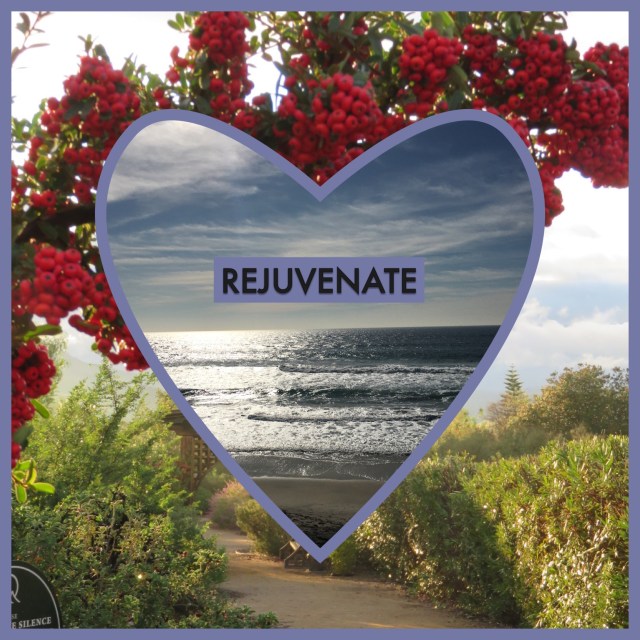
Rejuvenate 2016


Posted in reflection | Tagged , , , , | Leave a comment

September Reading Update

There was no August update because I didn’t finish a single book in August. 😦 Here are the books I read in September.

  1. The New Jim Crow by Michelle Alexander- After the national discussions about continued police events and the efforts of the Black Lives Matter movement, this was a must-read book for me. I believe that every educator, every American citizen, would benefit from reading this book. The book covers the history of our criminal justice system and the role the “war on drugs” has played in imprisoning exorbitant amounts of black men in the past three decades. There are so many statistics in here, I sometimes felt like I was reading the longest research paper ever. My heart and soul ached while reading many of the sobering facts. The author’s call to action at the end is for us to begin a dialogue and plan real action. I would love to talk to anyone who has read this book.
  2. The Girl with the Lower Back Tattoo by Amy Shumer- I listened to the audio version of this book, read by the author. Though I don’t know much about her comedy, the book was funny and entertaining. Her chapter about what it’s like to be an introvert was spot-on, and exactly how I feel so often. Extroverts would benefit from reading that essay!
  3. Make Me (#20) by Lee Child – It’s a good thing I’ve been keeping my reading lists this year, because I can never remember which Child books I’ve already read. In this story, Reacher gets sucked into a private investigator’s drama and travels all over the US in search of a missing PI. I was fascinated by the research around the “Deep Web” in here, and the underbelly of shady activity online.
  4. Adnan’s Story by Rabia Chaudry – As a longtime addict of the Serial and Undisclosed podcasts, of course I had to get this book! I listened to it, read by the author, who is now a familiar voice thanks to the podcast. After all my addictive podcast listening, I did’t expect to learn much new information in this story. I was pleasantly surprised to hear new facts of the case, and to see a personal side to both Adnan and Rabia. I highly recommend this book to anyone who enjoyed Serial!
  5. in a dark, dark wood by Ruth Ware – Thanks to my cousin for the loan of this fun mystery! It was scary with a good twist that kept the action moving. Each of the characters was so real I found myself rooting for them and disliking them in equal measure.  I love when authors begin in the present (knowing about a death/murder) and then flashback to the events that led to the big event (which slowly develops the mystery of the story).
Posted in reflection | Tagged , , , , , , | 3 Comments

New AND Different #IMMOOC

I am participating in a Massive Open Online Course (MOOC) with hundreds of other educators across the globe, about The Innovator’s Mindset by George Couros. 

The blog prompts for Week 2 are:

  • In Ch. 1, innovation is defined as a way of thinking that creates something new and better. What are some examples that you consider innovative? How is it new and better than what previously existed?
  • Review the “Critical Questions for Educators” in Ch. 2. Why are these important to understand those we serve in education? What other questions would you ask?
  • How do you embody the characteristics of an Innovator’s Mindset?

I want to address each of these prompts, so this might be LONG!

When I think of innovation, one local idea that comes to mind is an idea innovated by a colleague, Mari Venturino, and her friend Justin Birckbichler. They loved the idea of Breakout EDU games. After trying them with their students, they took the idea and innovated a new version: Breakout EDU Digital. In the original Breakout EDU game, players need to have lock boxes with clues to solve to unlock various locks in order to find the “prize” inside. These games are fun and interactive and being used in PD and classrooms all over. Mari and Justin made the idea new and better by digitizing the concept. Now players don’t need the physical materials, as the “locks” are online. You still solve clues but you can open the lock when you type in the correct answer. Not only is this a lower cost option, but players can also play virtually, instead of being in the same room at the same time.  In fact, they even hosted a live Breakout EDU Digital event with players from all over working to solve puzzles virtually. I have broken out of a Breakout and a Digital Breakout and they are both fun learning opportunities!

As a principal, I often had to innovate inside the box, as George addresses in Chapter 2. I was constrained by the hours of the school day and the budget I was given, and was told that most schools did PD at their monthly staff meetings.  I knew that my teachers needed and deserved more professional learning that that, so I made a change. First, I called staff meetings “staff learning time” and I emailed out any information that didn’t need to be discussed face-to-face.  I then began to use my budget to provide release time for teachers from a grade level team to come together for Lesson Study. This took the idea of collaborative planning and turned it around- the collaborative planning happened as a team, first thing in the morning. Then, as a team, we went into one classroom and co-taught the planned lesson. After the teaching, we debriefed about the students’ learning and made adjustments before going into another classroom and co-teaching the revised lesson to a new group of students. Not only was this different (new) than the traditional planning the teachers had done in afternoon meetings, but it was better (according to them and student results!) because:

  • we all owned the planning, the students’ learning, and our reflections
  • we began to create a common language about our pedagogy and our students’ learning
  • it highlighted the different strengths that each team member brought to the process

When I became a Director at the district level, I wanted to do something similar with the site-based instructional coaches I supported. But our work was less around designing lessons and more about observing practice and providing feedback and support to teachers. I took the idea of Instructional Rounds (from the book by City, Elmore, et.al.) and re-purposed it for instructional coaches. We formed small groups and visited various site’s together, focusing on site-based problems of practice and how coaching could address the strengths and needs we saw as patterns within our observations.  This was new and different from the traditional model of peer observations or coaches working in isolation.

This collaborative learning was powerful for the entire group of educators and reminds me of the points that Shawn and Brady made in the Week 2 podcast. It is so important for district staff to be out in classrooms, seeing the teaching and learning in action. How can we make decisions that impact curriculum and instruction if we never see those things in the hands of students and teachers? I love the idea of #500C (visiting 500 classrooms a year) and I am proud that I have visited 82 classrooms in my own district and 16 outside of my district so far this year.

The Critical Questions for Educators in The Innovator’s Mindset make me reflect on adult learning and the educators who are in staff meetings, PLCs, and other professional learning opportunities. Here are my versions of George’s questions with a few more of my own.

  • Would I want to be a learner in my own professional development workshop?
  • What is best for this teacher/leader?
  • What is this educator’s passion?
  • What are some ways we can create a true community of practice?
  • How did this work for our teachers/ leaders?
  • What strengths do our teachers/leaders bring that we can highlight and support?
  • How can we learn from our colleagues?
  • How can we share best practices across our system?
8-characteristics-of-the-innovators-mindset

Created by @sylviaduckworth based on  The Innovator’s Mindset by George Couros

The 8 characteristics of the Innovator’s Mindset are a great place for educators to reflect on their own journey towards innovation.  I agree with Katie Martin in that reflection becomes more important the longer I am in this work. Reflection is a key element in adult learning theory and a step we would be wise to build into all professional learning opportunities.

In the first semester of my doctoral program, a professor advised us to start a “leadership journal” and to write in it every day. We spoke a lot about how leadership can be isolating and how important it is for leaders to reflect on their work. I started that journal on September 29, 2012 and I’ve kept it going for four years (though not every day). In addition to that internal reflection, I use my blog as a way to reflect and create as well.

When Katie talked about risk-taking, I was reminded of so many teachers in the era of NCLB. Many teachers were forced into the box of “teach the curriculum with fidelity” which often meant “read from the Teacher’s Edition and do not deviate”. This time period took away creativity from teachers.  Now that we’ve moved past that time, many teachers are scared to take risks.  Some will say things like Katie mentioned (“They won’t let me!”). These teachers put themselves in the boxes they complain about out of fear; they’ve lost confidence in their own creativity and innovation because they were told that was wrong just a few years ago.

Leaders can facilitate an innovator’s mindset for teachers by modeling the way, by opening the doors, and by letting teachers know they don’t need permission to take a risk! This would be both new AND different for so many teachers and leaders.  It’s time, don’t you think?


square-peg-image

CCC licensed work by aitoff on Pixaby.com


Posted in reflection | Tagged , , , , , , , , , | 10 Comments