Hiking and the Common Core

What do hiking and the Common Core State Standards (CCSS) have in common? I recently returned from my first visit to Yosemite National Park, where I spent three days hiking some intense trails! As I reflected on my sore muscles and the pride of my accomplishments, I began to consider how preparing for this hiking trip was similar to preparing for an effective CCSS implementation.

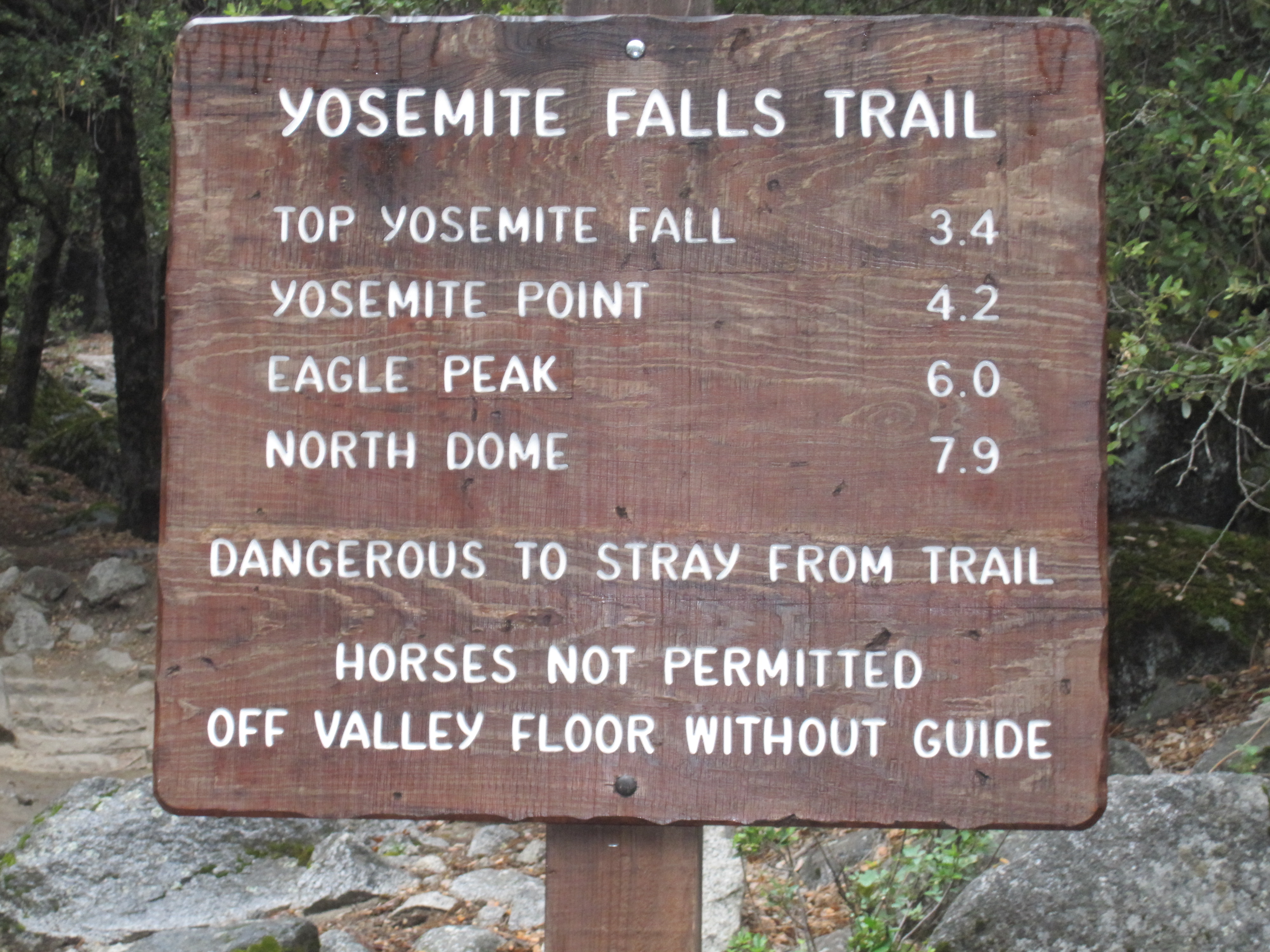
Guide post at the beginning of a trail- Must know where you are going!

Guide post at the beginning of a trail- Must know where you are going!

A prepared hiker/ CCSS implementor:

My dad and I- he was my "colleague" on this hiking adventure!

My dad and I- he was my “colleague” on this hiking adventure!

  • Plans ahead
  • Gathers the necessary supplies
  • Does research
  • Knows to expect the unexpected
  • Trains ahead of time
  • Doesn’t go at it alone
  • Stops along the way to reference guide points, replenish energy with supplies, collaborate with colleagues, or just rest
  • Celebrates the small milestones as well as the final goal
  • Takes pictures, celebrating the journey as much as the destination

2013-06-24 13.22.44

While these may sound like simple reminders, whether you are planning an extensive hike or a worthwhile CCSS implementation, time and energy must be spent planning long before you begin. I am so excited about the work we are doing in my district, thanks to some fantastic leadership, great collaboration, and LOTS of planning and communicating.

The more I hear about what is NOT happening in other places, the more upset I become about the future of CCSS and education. We have a prime opportunity before us to not only change the face of teaching and learning, but truly support a transition to preparing our students for a global society and a world beyond the four walls of a classroom. However, if districts and schools do not capitalize on this opportunity now, they may not make it to the top of the mountain (which my father and I did accomplish!).

I hope that you, as a reader here and a leader somewhere, take the initiative to support your CCSS implementation or begin to challenge other leaders to come together to begin the planning phase! We still have time… but we can’t go at it alone.

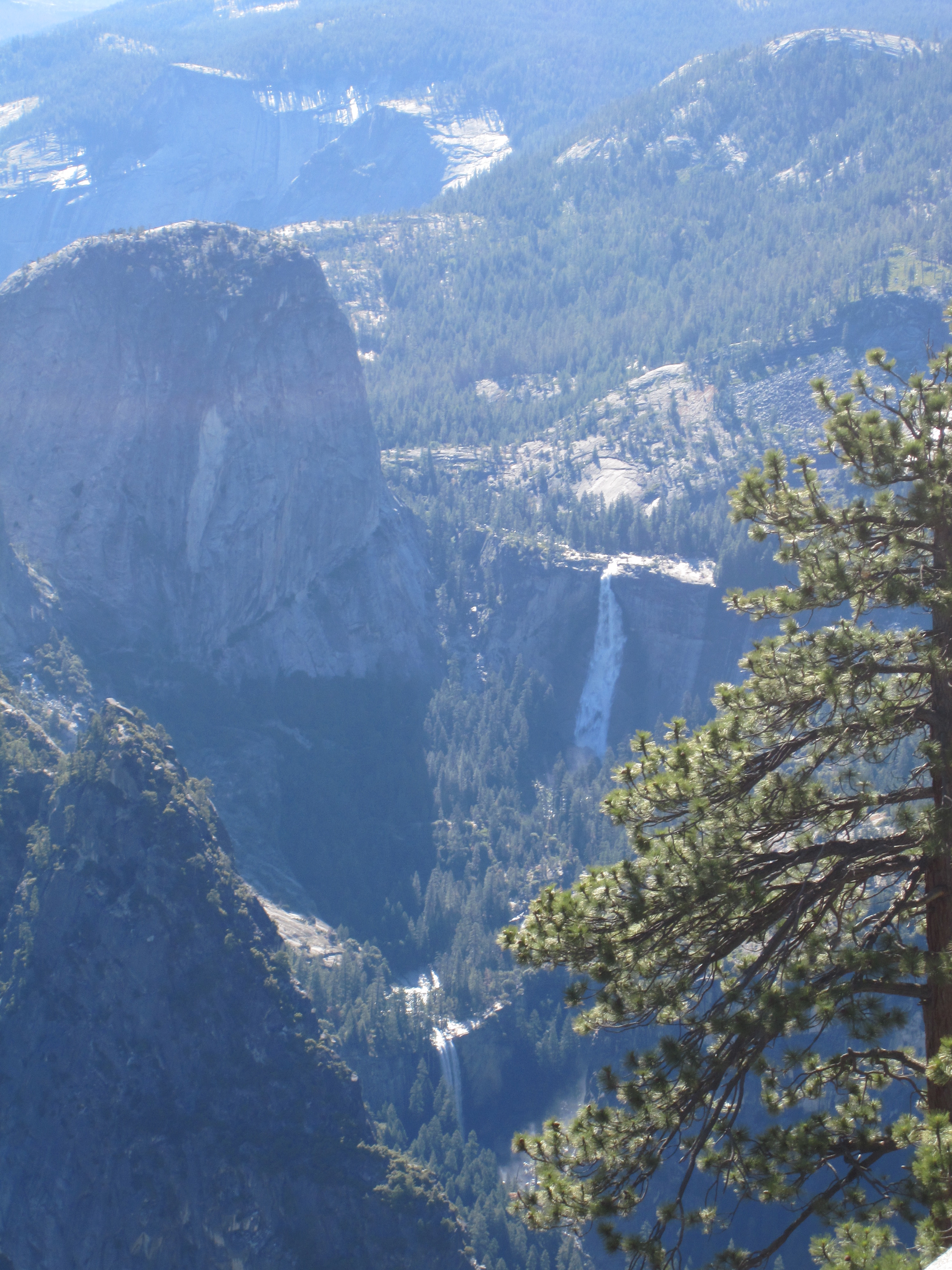
View from Glacier Point

Posted in Leadership, reflection | Tagged , , , | 5 Comments

Consensus

Our district’s summer professional learning is well under way. Teachers have an opportunity to learn about our new Common Core Units of Study and to collaboratively plan as grade level teams. One whole portion of the first day is dedicated to teams coming to consensus on how to plan out a unit into manageable chapters of learning.

Not only is it fascinating to observe the entire process, but it is interesting to reflect on the strengths and challenges of such intensive, professional collaboration.

Strengths:
– When learning new standards, it is helpful to discuss and analyze the content with colleagues.
– Two heads are better than one… sharing ideas expands the resources and ideas!
– When a team struggles through a difficult conversation and emerges on the other side, with consensus, they are a stronger team.connected educators pic

Challenges:
– The larger the team, the more challenging it is for some groups to come to consensus, especially when it will affect what happens in each person’s individual classroom.
– When making a transition to new content that requires major shifts in thinking about teaching and learning, some teachers will fall back on what they are comfortable with. This may be a strategy to avoid the unknown or a lack of confidence.
– Coming to consensus is not always easy.

We in education are not always comfortable with cognitive dissonance (for ourselves or our students). This is something we must embrace and learn to work through, if we want to have any hopes of improving our PLCs, our collaboration, or our profession as a whole.  I hope that our teams continue to work through the challenge of coming to consensus as they collaboratively chapter each unit of study throughout the year.

Posted in Leadership, reflection | Tagged , , , , , | 2 Comments

Flagged for Follow-Up

Outlook_2007_Flags02

I am a very organized person. I am proud of my inbox and the system I created to keep it manageable and efficient. However, I haven’t yet created a system for revisiting blogs that I enjoyed and want to use or refer to again. Like important emails, blogs in my RSS feed or my Feedly account are flagged for follow-up. The problem of not having a system is that those little red flags on the blogs never go away! In addition, I don’t remember which ones I flagged because I enjoyed reading them, ones I flagged as reminders for future communications or initiatives or blogs of my own, or ones I flagged to return to when I had time for deeper reflection about the content.

I’ve decided to revise some of those flagged items now and capture my reflections.
Blogs I’ve read and flagged for follow-up:

* The Curse of Frequency In this post, Seth Godin discusses the reality that you are more likely to sell a product if you repeat your advertising; frequency sells. He also discusses how too much can put people off of your product. One of my favorite lines from this post is, “The line between frequency and annoying is thin indeed”.  As I read and reread this post I thought about the connection to education and professional development. When is repetition a good thing? When does it hinder our work? If professionals are trained to expect that a message will be shared in a variety of ways over an extended period of time, are they less likely to pay attention to the initial message?  Sometimes I get frustrated by the amount of hand-holding in our profession. People have become used to, and even to expect, the fact that they will receive an email inviting them to a meeting, a calendar request, and a reminder to attend. If all modes (or other similar avenues) are not used, someone blames the meeting facilitator for lack of communication.  Do we really need 2, 3 or more reminders about one meeting? Sometimes I think the curse of frequency aligns with the lack of personal responsibility for being a professional learner.

*People Builder-  In this post Vicki Davis shares three ways to be a people builder: be challenging, encouraging and honest. My favorite line is, ” Are you challenging your students to do more and be more? They will rise or sink to the level of your expectations”.  Our expectations matter. This post is a nice reminder about the power we have as teachers, coaches, and leaders to make a positive [or a negative] impact on someone’s life. I vow to be challenging, encouraging and honest with myself and my colleagues this year.

* 8 Keys to Do-It-Yourself PD– This post from the Powerful Learning Practice group gives eights steps for being a learner in charge of your own professional development. I love all eight steps and the idea that we must each take control of our learning and growth; it is a professional duty. Step number two- Participate in Courageous Wonderment- is one that I plan to work on, especially over the summer when I have a little more time to breathe and reflect and wonder!

EVERYTHING: I enjoy each and every blog post that Shelley Burgess, my friend and colleague, has written, but recently these posts have come back to mind: Becoming leaders of readers and It’s not a PLC without all three letters. Shelley does such an incredible job of connecting current educational research and/or trends to her own reflections and our daily work. She is able to make personal connections that reach the heart of teaching and learning while eloquently describing the importance of achieving lofty goals.

questions2

  • What have you flagged for follow-up?
  • Do you have a system for tracking relevant blog posts for future use?
Posted in reflection | Tagged , , , , , , | 4 Comments

One Year Down, Two To Go!

SDSU_3Color

I just finished the first year of my doctoral program; I am working on an EdD from San Diego State University. The program is a cohort model, where, as a group, we travel together through theory and practical courses while being guided through the writing of our dissertation. This first year was both easier and more challenging than I expected in surprising ways. I learned a lot through my studies this year, but more importantly, I learned a lot about myself. Before I get too far into my own research, I wanted to take time to capture some of my reflections on this first year.

You get out of this (or any program/ project/endeavor) what you put into it

From one of our first classes, in which the professor told us on day one that we were all getting an A, I learned that not everyone wants to work hard. That professor went on to explain, through the example provided in The Art of Possibility by Rosamund and Benjamin Zander, that we would have to “earn” our A throughout the semester. In fact, our first assignment was to write him a letter explaining how we had earned our A, as if it was the end, not the beginning of the class. After writing our letter, it was really up to each one of us to actually do the work we said we would in our letter. It soon became clear to me that hearing they had already earned an A gave some people the freedom to stop working for the rest of class. Being a self-proclaimed “life-long learner” this bothered me for a long time. Finally, I had to come to turns with the fact that I will get out of this program what I put into it, and it is not up to me to control the efforts that others chose to put forward (until it comes to group work – see below!). I have made a commitment, of my time and patience, to complete this program for my own further advancement. I know that I will not only earn my A’s, but will truly earn the degree, the title, and the knowledge, by the end of these three long years.

Group work

I have never been a fan of group work. As a true introvert, I do not enjoy large groups nor forced social situations. While I love collaborating at work, and truly feel that my best work is a result of teamwork and quality collaborations, I find group work as class assignments to be my least-favorite method of assessment. Regardless of my age or the class, in most groups, the work tends to get done by one or two people, instead of an equal share by all. Or worse, if you have all Type-A personalities, you have to deal with a power struggle over the font and color choices within a glorious PowerPoint presentation. Really? That is not why I’m pursuing this advanced degree! However, as a member of a cohort, it is one of my learning tasks to get to know my fellow classmates and work alongside each of them at some point. Not all of our groups projects have been complete torture. I did get to pretend I was on “The Dating Game” as part of a skit to liven up a presentation on APA style! 😉 What I’ve learned about myself through these experiences is that I can work with a variety of people, that I don’t always have to be in charge, and that it doesn’t hurt me to step outside of my comfort zone once in a while.

Research

Reading research is not exactly fun! I have learned how to read long, extensive research articles and reports. I have also learned how to be a consumer of this information, reading for what worked as well as what didn’t, what was stated and what was omitted in the results, and how to determine future research needs within our profession. I realize that the phrase “research-based” gets bandied about in education often without any actual research being cited. One thing I have learned is that there is a lot of educational research available to those willing to search and study; our profession could benefit from a more careful analysis of what that research is telling us about theory and application to teaching and learning.

Leadership

Leadership

Writing

I have always enjoyed writing. Writing comes easily to me, however, revising and editing my own work does not. Over this last year I have written at least eight small papers (how did anything under 10 pages become “small”?!), have drafted the first 30 pages of my literature review, and have drafted the first version of my methods section. I still have many more pages to draft, but more daunting is the thought of rereading all those pages in order to revise and edit my work. Knowing that I’m aiming for over 150 pages is intimidating. I am learning new strategies to force myself to edit as I work, to return to my work in new ways, and to find new ways to ensure that my work is edited properly!

to work or the beach

As I finish this first year, I am reminded of the picture above. This sign sits on the fence of a house directly across from my office, which happens to be about six blocks away from the beach. I am lucky enough to be able to take walks down to the beach and back during lunch on rare days without full or mid-day meetings. I am also lucky enough, and grateful, that it isn’t usually a hard choice to return to work; I love my job! It isn’t always as easy to remind myself to get to the “work” of this doctoral program. Having to set my own schedule for making progress on my research is up to me; only I am negatively affected if I chose to head towards the beach instead of work. Making the time in each week to read, study, and reflect on my new learning is part of my balancing act. Learning how to be patient, especially when revising and editing my own writing is my learning goal. Achieving this, and my larger goals, will benefit me in my current work, my future work, and throughout my life. While I enjoy the beach, I choose to do the work.

It is all up to me.

I choose to earn my A.

2013-01-09 08.36.51

Previous posts about this learning journey:

Posted in Doctoral Journey | Tagged , , , , , , , , | 6 Comments

Finding Balance

Balance.  How do you find balance within your life?  
Lately I have been struggling with how to find balance when each task before me seems to be more important than the previous one. Simply put, I can narrow down the big areas of my life into these categories:
  • Work
  • Dissertation
  • Family and Friends
  • Healthy living
  • Sleep, rest, relaxation
  • Extra curricular activities
 Image
Each one of these categories is important to me, and an important part of living a balanced, fulfilled life. However, when one task, such as the hours and hours of homework (reading, researching, writing) required for the two summer courses I am currently taking, makes it’s presence known in a stronger way than normal, something has to give. When two or more of these items (such as homework, friends visiting from out of town, the need to schedule physical therapy sessions, and the time to plan for summer professional development workshops) become critical at the same time, it gets harder to find a balance. Not only does some area need to suffer a little, but the stress of prioritizing weighs heavy, at least for me. Especially when I enjoy what I do and I want to create a balanced life within each day, week, month and my life.
 Image
Here is what I am doing to help myself find and retain the balance that is essential to my physical and mental well being:
1. Time management: I am naturally a list-maker and a woman who lives by an organized calendar, but this has become even more important during this stressful time period.  If I know I have X number of hours of homework to get done within a week, I map out exactly how much I need to do each evening to be prepared. My calendar includes tasks from all of the key categories I need to balance.  If I don’t schedule time for my workouts, they won’t get done.  If I don’t schedule time to plan the professional development workshops, I won’t be prepared to facilitate the important learning journey our entire district is continuing on this summer.  I make time management a priority to create the balance I need.
2. Prioritize me:  This is not easy for most of us, but it is necessary.  I realize that there is value in saying no to optional tasks to avoid needless obligations.  More importantly, I have learned that if I don’t take care of myself, I suffer physically and emotionally.  I worked too hard to lose weight, get in shape, and transform my lifestyle into something more healthy than I ever thought possible, to ruin it all by stressful, unscheduled moments. Therefore, I never let myself forget that healthy living is an important part of my balancing act!
3. Reflect:  The busier I get, the more I want to skip this step, but I’m forcing myself to stop, reflect and jot (through journaling, blogging, or collaborative conversations with friends, colleagues, and classmates).  Reflection not only helps me process where I’ve been, but also helps me see more clearly where I need to go.  I learn by reading, writing, and talking about my learning.  Reflection is a crucial element in my learning journey and to skip it because I am busy would take away quality from the work that I am doing.
What do you do to maintain balance during stressful time periods?  How do you prioritize the important tasks, say not to that which can survive without you, and take care of yourself in the process?
Posted in reflection | Tagged , , , | 9 Comments

Professional Collaboration

I am one of the moderators of the west coast edition of #satchat (along with @burgess_shelley, @drjolly and @DCulberhouse), originally started by @ScottRRocco @bcurrie5 and @wkrakower. Every Saturday at 7:30 EST and PST educational leaders join us for discussions about learning, leading, and living in these educational times.
Today I am reflecting on the power of this form of professional collaboration. No matter what the topic is, at the end of the #satchat hour I am invigorated. I often have a stronger, clear focus on my own educational philosophy and vision. I always have more ideas than I ever thought possible. I usually have new colleagues with whom I want to connect, building my PLN and the external resources available to me in the future. I have many liked tweets to refer back to, for website, blog, and book references as well as memorable quotes or ideas.

It is amazing to me how much I can learn about myself during these chats. I engaged in discussions I have never considered before. It is powerful to see how others respond to our questions and to each person’s individual answers. You never know who you will make a personal connection with during a chat, or what comment will spark great debate, controversy, or complete agreement. I can almost provide a 100% guarantee, however, that you will leave each and every #satchat excited by the amazing educators on twitter, engaged in new learning, and interested to share ideas with others. Professional collaboration can take many forms these days. While a twitter chat is just one form, and may not be right for everyone, I hope that all of my professional colleagues create opportunities for authentic, meaningful collaboration to occur. What have you collaborated about lately?

connected educators pic


So Many Hashtags, So Little Time


Posted in Leadership | Tagged , , , , , | Leave a comment

Questioning

Image
I recently spent a weekend with friends and family members, including a 2 1/2-year-old. I spent the first half of the weekend being amazed by all of the questions this little girl asked: Why are you moving your chair Mommy? Why is the pool cold? Can I have strawberries? How did it get like that? What is he talking about? Will you read this to me? Not only did she ask tons of questions, but she listened intently when her parents answered her. She was so inquisitive and curious and fun to watch! For those of you who have children, I’m sure this isn’t surprising to you. But for those of you who are educators, I ask, is this what you hear in classrooms?
I spend the second half of the weekend reflecting on why this young child’s curiosity was so surprising to me. I babysat children when I was younger. I tutored, student-taught, taught and was a principal, surrounded by students from age 4-18. I have years of experience working with students in and outside of school. What I realized, however, is that the more time I spend in classrooms now, the less I hear questions being asked by students. Throughout my classroom visits, I hear teachers asking questions. This then leads to individual students responding to those questions, or students talking to partners about their responses. Occasionally, this leads to students writing responses. But it is a rare occurrence when the students are asked to generate questions. And I don’t just mean questions when they are confused and need a specific support.
 I want to hear our students’ creativity come out in the form of questions. Children are naturally curious (as anyone who spends any time with toddlers can attest!). How is it that a typical day in school can stifle those questions? What can we do to encourage questions? How do we provide meaningful opportunities for our students to ask authentic questions and share their thinking throughout the learning process? How do we structure the school day so that students not only ask their own original questions, but spend time seeking out answers to their questions through research, collaboration, and discovery? What does that classroom sound like?
Other posts on Questioning:
Posted in reflection | Tagged , , , , | 4 Comments

The Joy of Writing

As we prepare to transition to the ELA Common Core State Standards next year, writing has come up in discussion over and over again. The phrase that bothers me most in these discussions is, “We need a writing program”.  A writing program does not teach writing instruction, does not address specific students’ writing strengths or needs, and a writing program definitely does not teach the joy of writing.

I have always loved to write. I never knew how easily it came to me until I saw my colleagues struggle with their own writing during professional learning opportunities where we, the teachers, had to go through the entire writing process. It was through that experience that I realized I enjoy teaching writing as much as I enjoy writing. But that is not a common joy for many teachers nor for most students.

We need to infuse our curriculum, instruction, and professional learning with writing knowledge- as writing crosses content areas, grade levels, ages, genres, and standards. Our teachers need to experience the joy of writing so that they can share that with their students. I just pinned the following quote (I don’t know the origin of it, but I love the message) on Pinterest this week:

“You learn to write better by reading. You learn to read better by writing. Reading and writing work together to improve your ability to think!”


happy writer


Other posts on writing:

Formulas for Writing?

Writing as Stress Relief

The Writing Process for a Blog Writer

Why I Write


Posted in Writing | Tagged , , , | Leave a comment

Time for Reflection

2013-01-28 07.20.30Lately I have realized more and more how important it is to stop and take time to reflect.  This is a habit that helps both personally and professionally, but I find that in our profession we do not build in that time often enough. We are so busy running from meeting to meeting, visiting classrooms, coaching teachers, that we rarely take time for something that can truly help us become stronger, more capable leaders. Reflection.

I myself struggle to slow down. Being from New Jersey I have always been teased because of how fast I talk. I do not have a natural habit of slowing down and thinking about my work. I am working on developing this habit. Sometimes I find that actually writing my thoughts down (in a journal, in a blog post, in comments to others’ blogs, in tweets) helps me reflect and walk away with new thoughts and ideas. Other times talking to my colleagues helps me gain a new perspective. Most often, my commute to and from work is where I do my best thinking and reflecting. But none of it is a consistent habit yet.

I believe that if we do not give ourselves time for reflection, it will not get done. In order to build this habit, I’m going to try to give myself more structured time in my daily schedule.  I want to think about what is working, what is not working, what my future goals are, and what I’m doing to support the vision of our district as well as my own professional goals.  I can only become a better, more focused leader by taking the time for reflection.

How do you take time to reflect on your work?

Posted in reflection | Tagged , , | 4 Comments

Coming from a place of strengths (and acknowledging differences)

Do you know your own personal and professional strengths? Do you begin your work with a focus on what you are good at, or where you need improvement? When you come into a meeting or a collaboration with colleagues, is there ever a recognition that everyone brings their own unique strengths to the group?

jfk-p_kot0ey1ro8fqrv3a

I recently had the opportunity to re-take the Strength Finder assessment for a class. The first time I took this assessment was during my first months as a principal. I offered the book as an optional book club and about 12 staff members participated in the reading and discussion of our strengths. I still have the chart my secretary created that outlined each staff member’s strengths and where we had commonalities. Sadly, after the book club discussion, I never did much with the information.

Fast-forward five years and I am now in a doctoral program where we took the 2.0 assessment and analyzed our results (along with those of the Myers-Briggs Personality Inventory and a Leadership 360 degree survey) with our classmates. After my class discussion I offered two of my work colleagues the opportunity to participate in the assessment.

We had a great conversation about our strengths, what they say about us, and how we can begin to reflect on using our strengths more within our work. While this was nice, the most interesting part of our conversation was when it led to us reflecting on both teacher collaboration meetings and teachers’ differentiating for students in classrooms.

How often do we (in our classrooms or staff meetings or PLCs) take the time to recognize individuals’ strengths? So often we run meetings (or teach lessons) in the ways in which we are most comfortable. We use strategies that highlight our learning styles and preferences and assume that everyone thinks and learns the way we do. But the reality is, there are a variety of learning preferences, strengths, personality traits, etc., that make us all different. There may very well be people with whom you collaborate every day who are uncomfortable with the way in which you run a meeting (or teach a lesson). How often do we talk about this?

I think it is important that we are explicit with our purposes and our processes. The more explicit we are with the purpose of our actions, the more likely people are to understand.  This may also open the door to bigger conversations about different processes that we can try to incorporate different strengths/styles/etc. We need to be okay with that dissonance, and open to these dialogues if we have any hope to improve our professional collaborations and our instruction to support all students.

I encourage us all to come from a place of strengths while acknowledging the differences among us. What are your strengths?

Are we all the same?

Are we all the same?


Posted in Leadership, reflection | Tagged , , | 4 Comments