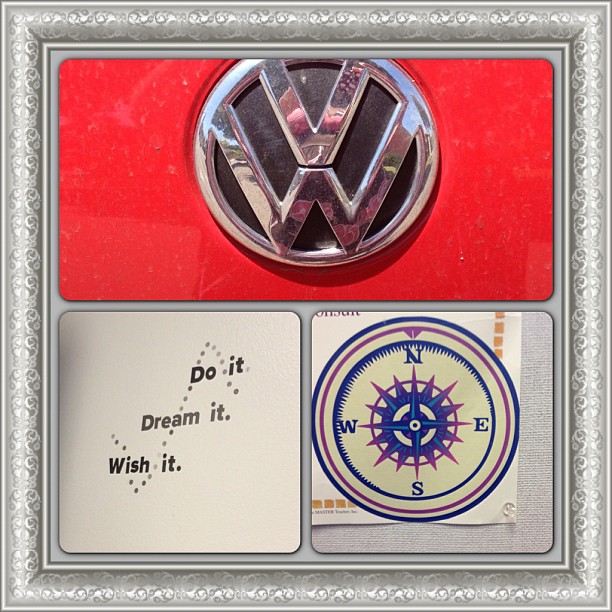
Throughout this month I’m participating in the August Break 2013.
Day 2’s idea was circles. I looked for circles throughout my day and found them all over! I also learned how to play with #Instaframe.
Throughout this month I’m participating in the August Break 2013.
Day 2’s idea was circles. I looked for circles throughout my day and found them all over! I also learned how to play with #Instaframe.
Today I learned about the August Break by reading this blog by Lisa (@TeachingwithSoul). The August Break was created by Susannah Conway and you can read all about it here. Basically, it’s a daily photo challenge, but as formal or informal as you want it to be. The August Break allows you to take a break from writing/ blogging while looking at life a little differently, through a camera lens. You post pictures… one a day or as many as you want throughout the month.
I was inspired to join the challenge not because I need a break from my sporadic blog writing, but because I enjoy taking pictures and would like to use my pictures to tell a story this month. My pictures may or may not have a link to learning and leading, but I know they will enhance my reflective practices (still a work in progress) and my desire to strive for balance in my life. So, here goes…
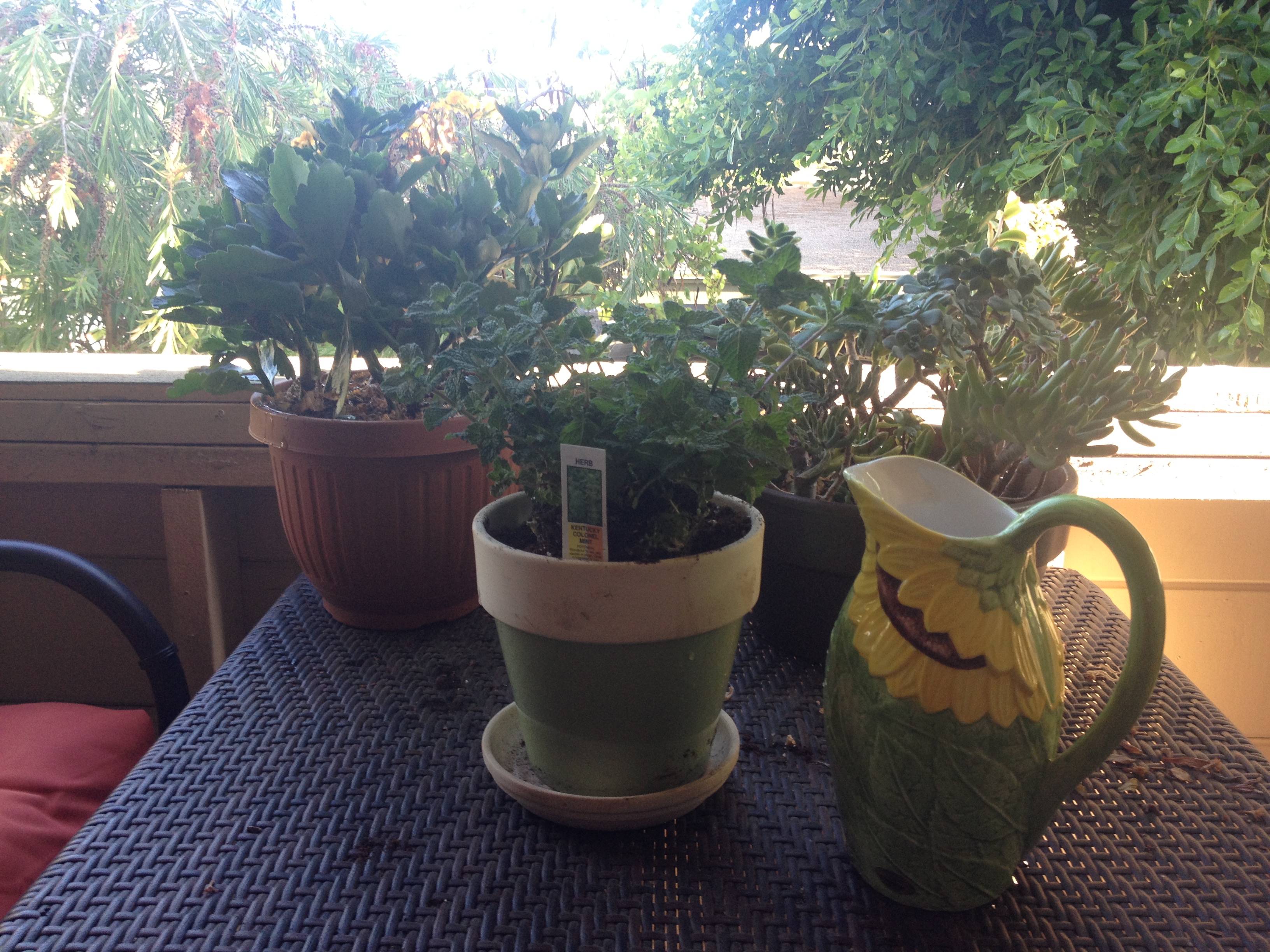
These are pictures of my latest adventure… trying to keep plants alive and figuring out how to grow fresh herbs on my tiny balcony.
I have written about the value of taking time to reflect before. In that post I shared my desire to develop a habit of reflecting. I’m back today to revisit the idea by sharing two resources that have helped me cultivate that habit.
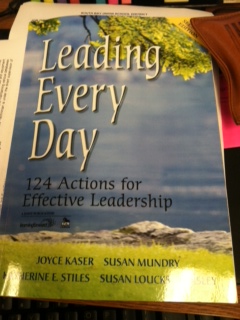
A colleague gave me the book Leading Every Day: 124 Actions for Effective Leadership by Joyce Kaser, Susan Mundry, Katherine E. Stiles, and Susan Loucks-Horsley.
This book is structured in a user-friendly way with built-in reflection questions. Each day has a leadership topic, a relevant quote and 2-4 paragraphs about the topic. The authors then provide a list of reflective questions to consider (as well as blank space to actually write in the book if you want!). I carve out time every morning I can to read at least one “day” and record my reflections in my working journal. This practice has helped me build a better habit of reflecting and has exposed me to a wide variety of leadership quotes and resources. I encourage anyone interested to use this book, or something similar, to build a reflection habit.
Another colleague gave me this jar as a gift: Wisdom, Quotes, Inspiration.
Not only do I love the sea theme (I am a Jersey Shore girl by nature!) and the fact that it was a creative, unexpected gift, but it has been a great source of reflection. Each day I take out one quote to read and reflect on, adding to my reflective journal. I have been a collector of quotes for decades, but not knowing what quotes may appear has made me truly stop, read, and think about each and every quote. Not only do I wonder about the meaning of the quote within my life and work, but I wonder about the relevance of the quote in the life of the person who gave me this jar. In my first week I have read quotes that I know and love as well as quotes I had never seen. I encourage you to consider creating this type of gift for someone else, as there is power in the words you find to be meaningful.
Here are some other bloggers thoughts on reflection:
I love music! I enjoyed playing various musical instruments and singing in the choir throughout middle and high school. Some of my favorite childhood memories center around music- singing along to the “Oldies” with my parents on car trips from New Jersey to Florida every Easter, trying to tape my favorite songs off the radio as a teenager, buying my first CD, and planning out all the CD’s that would go into my 6-disc changer (fancy!) in my first car before a long road trip. There are certain songs that can place me back to a very specific time and place just within the first few notes. Music is powerful. It can change someone’s mood – try not to smile while blasting your favorite song and singing at the top of your lungs in your car!
Music can also be a powerful instructional tool in the classroom. Music can support transitions between activities, can act as a tool for classroom management, can be used as text for close readings or figurative language analysis, can support making personal connections with students, and face it, it’s fun! 😉
I don’t think that we spend enough time supporting teachers with the use of music. One of the strongest teachers I ever had the privilege of working with, used strategies from Quantum Learning, including music, to motivate, encourage, support, and push her Kindergarten students to the highest levels of rigor I’ve ever seen in a Kinder class! Her students knew, by the opening notes of a specific song, when it was time to “clean up” or “put away Language and take out Math” or “line up for recess”. We spend so much time teaching our students the ins and outs of language; music is also a language that bridges communication gaps and enhances understanding.
I recently tweeted out about the lyrics to a song being perfect for an educational lesson:
I think the lyrics to Sara Bareilles’ song Brave would make a great close reading text!
— Amy (@DirectorAmy) June 21, 2013
I often sit in my car, singing along to my latest favorite song, analyzing the lyrics. Some songs have such strong messages (girl power! redemption! forgiveness! joy!) that I would just love to listen to students discussing the content. I truly believe that the lyrics of songs (appropriate to students’ age level, of course) can become excellent sources of text for our students to analyze. It would also be powerful to ask students to bring in their favorite (or original!) lyrics as examples of whatever is being studied in class (figurative language, unconventional punctuation, writer’s craft). Music can even serve as a mentor text for young writers experimenting with their voice and craft!
“You can be amazing
You can turn a phrase into a weapon or a drug
You can be the outcast
Or be the backlash of somebody’s lack of love
Or you can start speaking up
Nothing’s gonna hurt you the way that words do
…
But I wonder what would happen if you
Say what you wanna say
And let the words fall out
Honestly I wanna see you be brave”– Lyrics to Brave by Sara Bareilles
Read more at http://brave.sarabareilles.com/
Another post about my love of music:
My blog is one year old! It is hard to believe that I began this journey 365 days ago, soon after attending #ISTE12. When I began this blog, I didn’t have a goal in mind. All I knew is that I was impressed by all the bloggers I met or heard speak at ISTE and I knew this was something I could do. I wanted to sit in the Blogger’s Cafe and actually have a clue what people were talking about!
For many years, I had been thinking about working on my writing. I always thought I would write a young adolescent novel (which I may still do someday!) or a book on coaching teachers (still a possibility!). As a teacher, I constantly worked on my own reading and writing craft, filling up journals with my ideas and models for lessons with my students. However, I never considered a blog.
After one year of random blogging, I am glad I made this leap! I enjoy taking the time to reflect on various aspects of our profession. I have learned about myself, about blogging itself, and about harnessing my voice. I still don’t have any big goals in mind for the future. I won’t commit to publishing a certain number of blogs because my schedule changes so much throughout the year. During my lighter summer schedule I have been able to get a few extra blogs written and ready to share, which has been a nice change! I would like to write more often, but I feel it is more important to write when I have something worth saying, not to hit publish for the sake of quantity.
Thank you to anyone who is reading this and who has read any other posts over the last year. I appreciate the time you take out of your schedule to read, comment, tweet, or share my random thoughts. I look forward to another great year of learning and reflecting! The possibilities are endless…
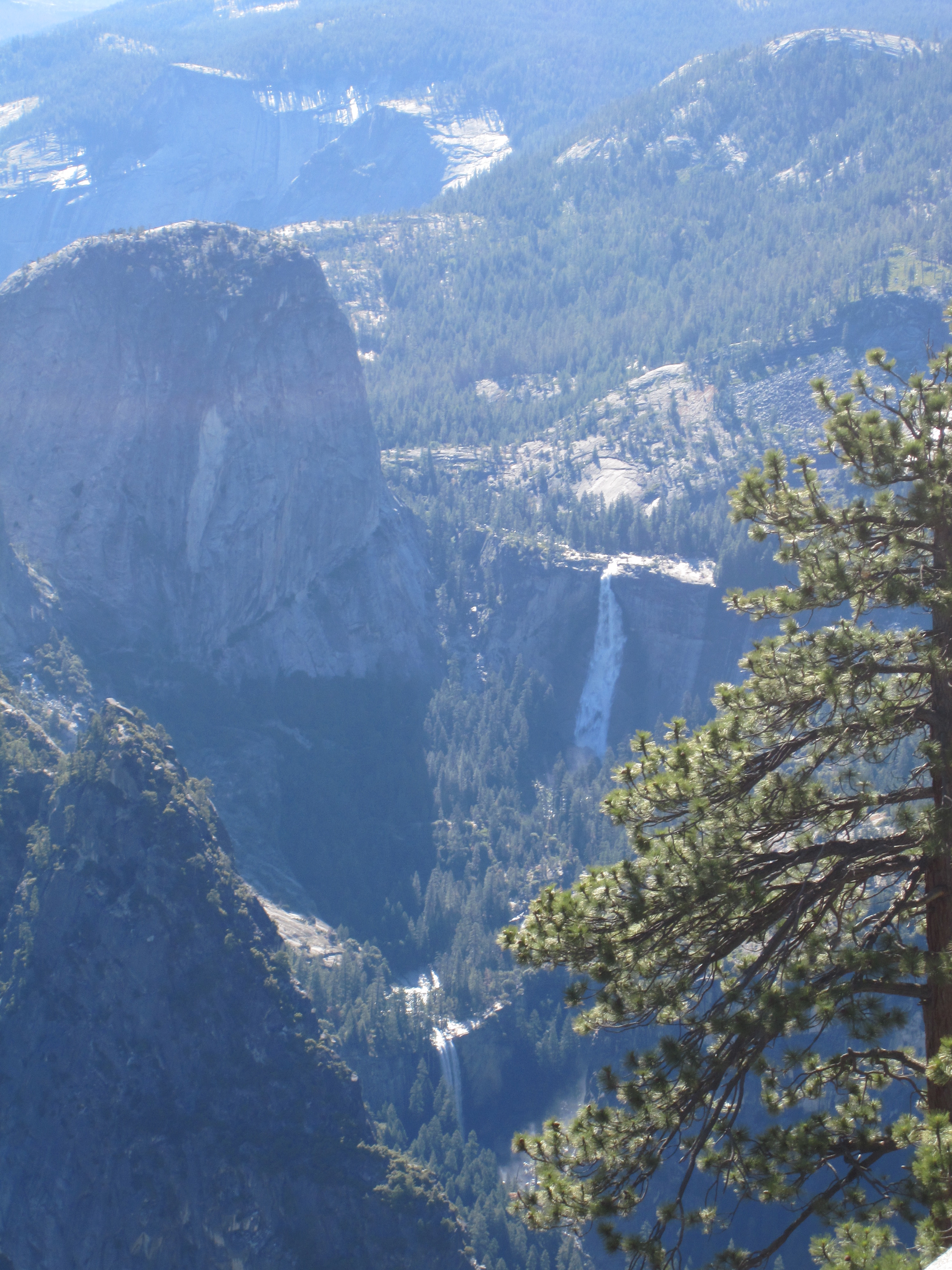
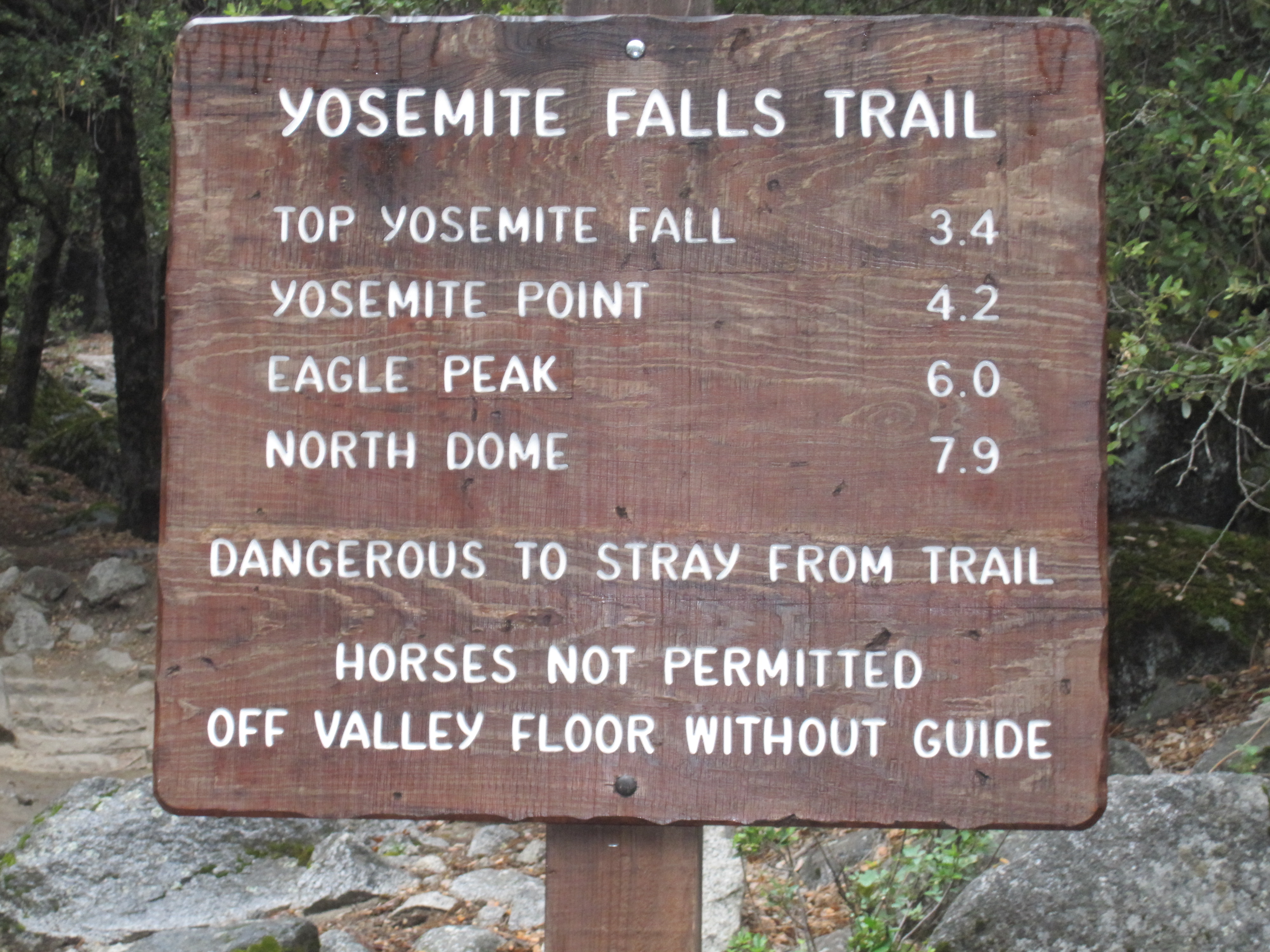
What do hiking and the Common Core State Standards (CCSS) have in common? I recently returned from my first visit to Yosemite National Park, where I spent three days hiking some intense trails! As I reflected on my sore muscles and the pride of my accomplishments, I began to consider how preparing for this hiking trip was similar to preparing for an effective CCSS implementation.
A prepared hiker/ CCSS implementor:
While these may sound like simple reminders, whether you are planning an extensive hike or a worthwhile CCSS implementation, time and energy must be spent planning long before you begin. I am so excited about the work we are doing in my district, thanks to some fantastic leadership, great collaboration, and LOTS of planning and communicating.
The more I hear about what is NOT happening in other places, the more upset I become about the future of CCSS and education. We have a prime opportunity before us to not only change the face of teaching and learning, but truly support a transition to preparing our students for a global society and a world beyond the four walls of a classroom. However, if districts and schools do not capitalize on this opportunity now, they may not make it to the top of the mountain (which my father and I did accomplish!).
I hope that you, as a reader here and a leader somewhere, take the initiative to support your CCSS implementation or begin to challenge other leaders to come together to begin the planning phase! We still have time… but we can’t go at it alone.
Our district’s summer professional learning is well under way. Teachers have an opportunity to learn about our new Common Core Units of Study and to collaboratively plan as grade level teams. One whole portion of the first day is dedicated to teams coming to consensus on how to plan out a unit into manageable chapters of learning.
Not only is it fascinating to observe the entire process, but it is interesting to reflect on the strengths and challenges of such intensive, professional collaboration.
Strengths:
– When learning new standards, it is helpful to discuss and analyze the content with colleagues.
– Two heads are better than one… sharing ideas expands the resources and ideas!
– When a team struggles through a difficult conversation and emerges on the other side, with consensus, they are a stronger team.
Challenges:
– The larger the team, the more challenging it is for some groups to come to consensus, especially when it will affect what happens in each person’s individual classroom.
– When making a transition to new content that requires major shifts in thinking about teaching and learning, some teachers will fall back on what they are comfortable with. This may be a strategy to avoid the unknown or a lack of confidence.
– Coming to consensus is not always easy.
We in education are not always comfortable with cognitive dissonance (for ourselves or our students). This is something we must embrace and learn to work through, if we want to have any hopes of improving our PLCs, our collaboration, or our profession as a whole. I hope that our teams continue to work through the challenge of coming to consensus as they collaboratively chapter each unit of study throughout the year.
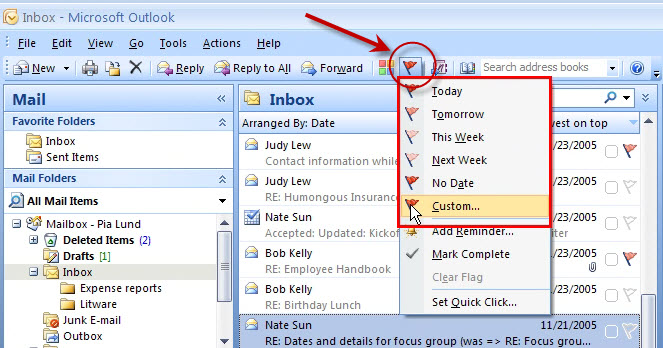
I am a very organized person. I am proud of my inbox and the system I created to keep it manageable and efficient. However, I haven’t yet created a system for revisiting blogs that I enjoyed and want to use or refer to again. Like important emails, blogs in my RSS feed or my Feedly account are flagged for follow-up. The problem of not having a system is that those little red flags on the blogs never go away! In addition, I don’t remember which ones I flagged because I enjoyed reading them, ones I flagged as reminders for future communications or initiatives or blogs of my own, or ones I flagged to return to when I had time for deeper reflection about the content.
I’ve decided to revise some of those flagged items now and capture my reflections.
Blogs I’ve read and flagged for follow-up:
* The Curse of Frequency– In this post, Seth Godin discusses the reality that you are more likely to sell a product if you repeat your advertising; frequency sells. He also discusses how too much can put people off of your product. One of my favorite lines from this post is, “The line between frequency and annoying is thin indeed”. As I read and reread this post I thought about the connection to education and professional development. When is repetition a good thing? When does it hinder our work? If professionals are trained to expect that a message will be shared in a variety of ways over an extended period of time, are they less likely to pay attention to the initial message? Sometimes I get frustrated by the amount of hand-holding in our profession. People have become used to, and even to expect, the fact that they will receive an email inviting them to a meeting, a calendar request, and a reminder to attend. If all modes (or other similar avenues) are not used, someone blames the meeting facilitator for lack of communication. Do we really need 2, 3 or more reminders about one meeting? Sometimes I think the curse of frequency aligns with the lack of personal responsibility for being a professional learner.
*People Builder- In this post Vicki Davis shares three ways to be a people builder: be challenging, encouraging and honest. My favorite line is, ” Are you challenging your students to do more and be more? They will rise or sink to the level of your expectations”. Our expectations matter. This post is a nice reminder about the power we have as teachers, coaches, and leaders to make a positive [or a negative] impact on someone’s life. I vow to be challenging, encouraging and honest with myself and my colleagues this year.
* 8 Keys to Do-It-Yourself PD– This post from the Powerful Learning Practice group gives eights steps for being a learner in charge of your own professional development. I love all eight steps and the idea that we must each take control of our learning and growth; it is a professional duty. Step number two- Participate in Courageous Wonderment- is one that I plan to work on, especially over the summer when I have a little more time to breathe and reflect and wonder!
* EVERYTHING: I enjoy each and every blog post that Shelley Burgess, my friend and colleague, has written, but recently these posts have come back to mind: Becoming leaders of readers and It’s not a PLC without all three letters. Shelley does such an incredible job of connecting current educational research and/or trends to her own reflections and our daily work. She is able to make personal connections that reach the heart of teaching and learning while eloquently describing the importance of achieving lofty goals.
I just finished the first year of my doctoral program; I am working on an EdD from San Diego State University. The program is a cohort model, where, as a group, we travel together through theory and practical courses while being guided through the writing of our dissertation. This first year was both easier and more challenging than I expected in surprising ways. I learned a lot through my studies this year, but more importantly, I learned a lot about myself. Before I get too far into my own research, I wanted to take time to capture some of my reflections on this first year.
You get out of this (or any program/ project/endeavor) what you put into it
From one of our first classes, in which the professor told us on day one that we were all getting an A, I learned that not everyone wants to work hard. That professor went on to explain, through the example provided in The Art of Possibility by Rosamund and Benjamin Zander, that we would have to “earn” our A throughout the semester. In fact, our first assignment was to write him a letter explaining how we had earned our A, as if it was the end, not the beginning of the class. After writing our letter, it was really up to each one of us to actually do the work we said we would in our letter. It soon became clear to me that hearing they had already earned an A gave some people the freedom to stop working for the rest of class. Being a self-proclaimed “life-long learner” this bothered me for a long time. Finally, I had to come to turns with the fact that I will get out of this program what I put into it, and it is not up to me to control the efforts that others chose to put forward (until it comes to group work – see below!). I have made a commitment, of my time and patience, to complete this program for my own further advancement. I know that I will not only earn my A’s, but will truly earn the degree, the title, and the knowledge, by the end of these three long years.
Group work
I have never been a fan of group work. As a true introvert, I do not enjoy large groups nor forced social situations. While I love collaborating at work, and truly feel that my best work is a result of teamwork and quality collaborations, I find group work as class assignments to be my least-favorite method of assessment. Regardless of my age or the class, in most groups, the work tends to get done by one or two people, instead of an equal share by all. Or worse, if you have all Type-A personalities, you have to deal with a power struggle over the font and color choices within a glorious PowerPoint presentation. Really? That is not why I’m pursuing this advanced degree! However, as a member of a cohort, it is one of my learning tasks to get to know my fellow classmates and work alongside each of them at some point. Not all of our groups projects have been complete torture. I did get to pretend I was on “The Dating Game” as part of a skit to liven up a presentation on APA style! 😉 What I’ve learned about myself through these experiences is that I can work with a variety of people, that I don’t always have to be in charge, and that it doesn’t hurt me to step outside of my comfort zone once in a while.
Research
Reading research is not exactly fun! I have learned how to read long, extensive research articles and reports. I have also learned how to be a consumer of this information, reading for what worked as well as what didn’t, what was stated and what was omitted in the results, and how to determine future research needs within our profession. I realize that the phrase “research-based” gets bandied about in education often without any actual research being cited. One thing I have learned is that there is a lot of educational research available to those willing to search and study; our profession could benefit from a more careful analysis of what that research is telling us about theory and application to teaching and learning.
Writing
I have always enjoyed writing. Writing comes easily to me, however, revising and editing my own work does not. Over this last year I have written at least eight small papers (how did anything under 10 pages become “small”?!), have drafted the first 30 pages of my literature review, and have drafted the first version of my methods section. I still have many more pages to draft, but more daunting is the thought of rereading all those pages in order to revise and edit my work. Knowing that I’m aiming for over 150 pages is intimidating. I am learning new strategies to force myself to edit as I work, to return to my work in new ways, and to find new ways to ensure that my work is edited properly!
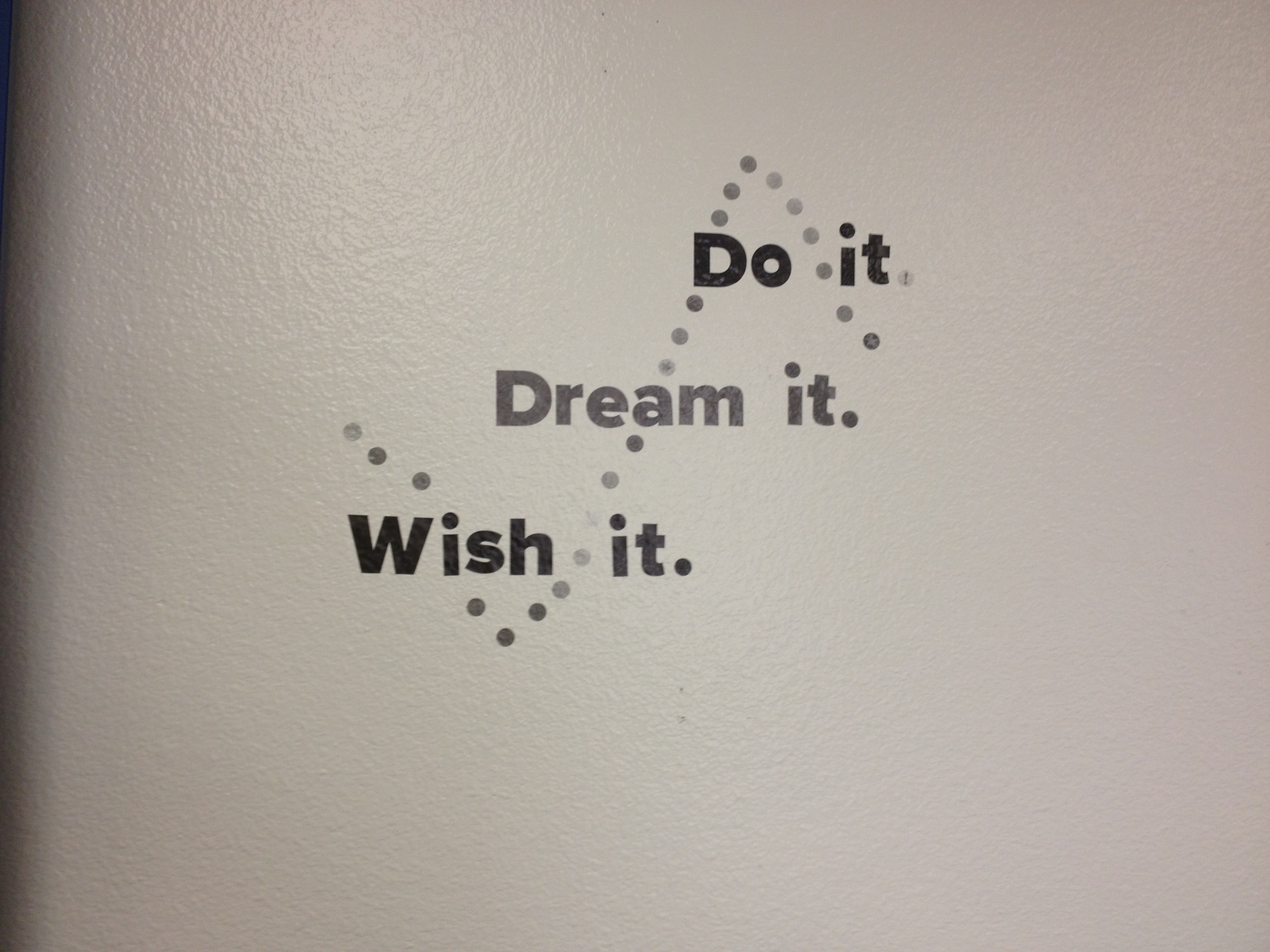
As I finish this first year, I am reminded of the picture above. This sign sits on the fence of a house directly across from my office, which happens to be about six blocks away from the beach. I am lucky enough to be able to take walks down to the beach and back during lunch on rare days without full or mid-day meetings. I am also lucky enough, and grateful, that it isn’t usually a hard choice to return to work; I love my job! It isn’t always as easy to remind myself to get to the “work” of this doctoral program. Having to set my own schedule for making progress on my research is up to me; only I am negatively affected if I chose to head towards the beach instead of work. Making the time in each week to read, study, and reflect on my new learning is part of my balancing act. Learning how to be patient, especially when revising and editing my own writing is my learning goal. Achieving this, and my larger goals, will benefit me in my current work, my future work, and throughout my life. While I enjoy the beach, I choose to do the work.
It is all up to me.
I choose to earn my A.
Previous posts about this learning journey: