Coaching for Equity Reflections #3

I am currently reading Coaching for Equity: Conversations That Change Practice by Elena Aguilar. Each chapter ends with a series of reflective questions for the reader to consider in our own equity and coaching journey, and I’ve decided to blog some of my reflections. I’d love to hear your thoughts in the comments.

Chapter 2: Jumping into Coaching for Equity 

Here are a few of the reflective questions from the end of this chapter, which delved into compassion, and knowing ourselves more deeply in order to coach for equity more effectively.

How do you think your background, experiences, and identity markers (especially your race and gender) affected how you felt when reading this chapter?

I am much more aware of my identity markers and the unearned advantages I was born with than I was when I began teaching or coaching years ago. Reading this chapter reminded me of my early days as a teacher. Looking back, I was similar to the teacher example in this chapter.  Sadly I, too, entered the profession as a white woman wanting to “save” the poor children of color I was assigned to teach. There were a few things Stephanie said in this chapter that made me cringe. I cringed because I said or thought similar things 25 years ago, and I also cringed because I know more now and I want us all to be better. As a young teacher, I didn’t know my own identity markers well, and I certainly didn’t know how to have empathy, without pity, for students who came from different backgrounds than my own. I made assumptions about my students and their lives based on media portrayals, not on reality. I learned how to get to know my students over time. Making home visits was one of the best things I ever did as a teacher or principal.

How do you feel when someone cries a lot? How is your response different based on your relationship to that person and based on what they are crying about?

This is an important reflection because equity work is challenging and often brings up a range of complex emotions. I, myself, am prone to cry when I am stressed out, overwhelmed, sad, or hurt. When I’m speaking with someone who is crying, I try to acknowledge the person’s feelings and give space for them to share the true cause of the tears and underlying emotions. The level of trust and familiarity in the relationship is a critical component.  If I already have a lot of trust with someone, I can push through tears and emotions and go deeper into issues. However, if I have limited trust or am in a new relationship, I often feel myself slowing down or backing away when someone expresses significant emotion. I appreciate reading the way Aguilar approached the crying teacher throughout this chapter, as she listened, waited, returned, addressed the crying directly, helped the teacher name the emotions, and coached her to begin to make a plan to help herself.

I appreciate that Aguilar ends this chapter with a to do item for us to read books that will help us learn about people whose identify and experiences are different than our own. This is something that drives many of my own reading choices, which I track on my monthly reading blogs. I want to make sure that every month I am reading something about or by someone with different identity markers than my own.


Coaching for Equity Reflections Series:

Posted in Coaching | Tagged , , , , , | 10 Comments

Coaching for Equity Reflections #2

I am currently reading Coaching for Equity: Conversations That Change Practice by Elena Aguilar. Each chapter ends with a series of reflective questions for the reader to consider in our own equity and coaching journey, and I’ve decided to blog some of my reflections. I’d love to hear your thoughts in the comments. My first reflections, from the introduction, are in post #1.

Chapter 1: Transformational Coaching: A Model for Change

Here are a few of the reflective questions from the end of this chapter, which defined Aguilar’s transformational coaching model.

Which components of Transformational Coaching (TC) do you already practice? Which elements of TC are not a part of the way you coach? 

The 3 components are the coach, the client, and the systems.  Throughout my career, I have learned to pay more attention to my own learning and emotions, and the power they play in a coaching relationship. I try to always be mindful of how I am showing up, but this is something I am constantly reflecting on after a bad day.  Having been a coach throughout so many of my roles, I feel confident that I attend to the client and how they are showing up. While I’ve done a lot of reading and work in systems-thinking, this is always an area of growth for me. To coach to transform systems and the individuals within a system is bigger than any one role I’ve had. I’ve never truly been in a place where our focus was to dismantle inequitable systems.

If you’ve ever received coaching, how would you describe it? What domain (behavior, beliefs, or ways of being) did it focus on? Is there a domain that you would have liked the coach to pay more attention to?

I have been mentored by many colleagues and supervisors in my career. As a principal, I had the opportunity to have a coach, dedicated to supporting me and my work as a new school leader.  Looking back, I believe that coaching was focused on behaviors – we spent a lot of time discussing what I was doing, or planning for what I would be doing next.  I wish we had spent time on beliefs and ways of being. As a younger leader, I was struggling because I didn’t know how my mood, attitude, and beliefs were all showing up in front of me, taking up space in new relationships. If I had known that my way of being impacted everyone around me, it would have saved me some bumps and bruises along the learning journey!  I also wish that I had been coached around my own beliefs, so that I could have begun my own anti-racism work years earlier than I did. Looking back, there is so much that I didn’t know and that I wish I had learned earlier in my career. It’s hard to dismantle a system that you don’t even realize is built to perpetuate inequities you’ve never been aware of, due to your own (my own) privilege.

How would you describe the coaching you do?  Which domain do you focus on? What impact could you have on your clients, organization, and students if you coached in all three domains? 

Coaching is an element of my role, and I feel that I coach into behaviors and ways of being more than I coach into beliefs.  I think that coaching into beliefs requires trusting relationships, which take time to develop. I think that I enter discussions that involve beliefs very cautiously, because I don’t want to make assumptions too quickly, nor do I want to shut down a person’s willingness to continue a conversation with anything too bold too soon.  I think this is an area I need to be aware of, so I can lean into these coaching conversations more confidently as I continue to learn and grow. I also hope to model how to approach these conversations, as I believe it is  the responsibility of all educators to challenge systems that perpetuate inequities.

How might your experience as a child have been different had your teachers worked in a system that used this model of coaching for equity?

I find this question fascinating!  I grew up in a small community with a population that was about 99% white middle class families. Many of my friends had working parents who had graduated from college, and the assumption was that we would all go to college as well. If my teachers had been coached using this model, I believe I would have been exposed to a lot more of the world (outside of the small bubble of our homogenous community) sooner, and with a different lens on my own upbringing. I also believe that there may have been a deeper discussion about our futures that encompassed more than the four-year college track that was expected of us.


Coaching for Equity Reflections Series:

Posted in Coaching | Tagged , , , , | 11 Comments

Greens CA Schools and Community Colleges Summit 2020

I’m writing a series of blog posts to document my learning about green schools; work that I have landed in over the last year and a half. Please follow along with my journey and share where you are in the environmental sustainability movement. 

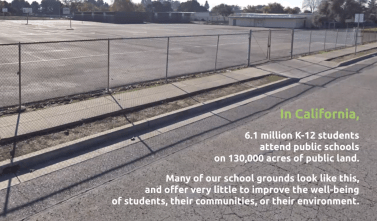
Last week I attended the Green CA Schools and Community Colleges Summit 2020, which was a virtual event this year.  Last year was the first time I attended this event, and I shared my reflections and new learnings in my post about sustainable education. This year, the picture and quote below was shared by the keynote speaker.

Soon after seeing this picture, I had the opportunity to spend the day with my 7-year old nephew. As part of our day, I drove by his school (in another state) since I had never seen it. He is still in distance learning, as his district hasn’t brought students back on campuses yet. As we drove around the block of his school, we talked about where his past classrooms had been, where he eats lunch, and other random things a 7 year old thinks to tell you about a school he hasn’t been inside of for over 7 months. The one thing that struck me was the similarity to the picture above.

The school is made of of two large buildings, one of which is two stories. I saw a lot of brick, and then a lot of empty concrete.  There was a small play structure in the Kindergarten area, a medium-sized play structure for the older students, and some basketball courts.  There was a beautiful area of green grass in the back of the school, that my nephew said he didn’t use. The largest outdoor space was made up of empty blacktop. This looked similar to most schools I’ve worked in over my career, but it was the stark opposite of the schools in my current district.

I’ve blogged before about our green initiatives, which I’m so proud to continue to learn about and support. Our schools all have at least one garden, and many of them have a variety of garden areas around the campuses. Right now, as our students are back on campus in a hybrid learning model two days a week in smaller cohorts, these spaces are not only an opportunity for environmental literacy lessons, they also serve as a space for outdoor learning.  Many schools are trying to figure out how to bring learning outside during COVID-19. Because of the incredible forethought of our former and current superintendent, our schools have natural outdoor learning spaces, and our teachers and students are used to spending time outside not just for recess and lunch, but for learning as well.  Not all learning is taking place outside, but our teachers have the ability to make thoughtful decisions about how and when they might take learning outside naturally. Thanks to the great weather we have in Southern CA most of the time, this is possible to do most every day.

Thinking back to my nephew’s school, and so many other schools around our country, I hope that educational leaders can begin to think outside of the classroom walls and the concrete blacktops to create greener campuses that promote thinking, learning, and happiness for all students. They keynote speaker mentioned “sponge” schools, where students soak up what is around them. It’s up to us to bring our students to nature and nature to our students in authentic learning experiences.


Previous post(s) in this green schools series:

Posted in green schools | Tagged , , , , | 4 Comments

The Small Joys on Social Media

My favorite podcaster, Laura Tremaine of the 10 Things to Tell You podcast, created an amazingly positive day on social media called #onedayhh. The goal is to share your day hour by hour for one day. The 2020 event took place on Thursday, October 22 and it was the second year I participated on Instagram (with a few additional pictures shared on Twitter!). This year, I set an alarm for the top of every hour and I successfully posted every hour from 6:00 AM to 8:00 PM.

What I love about this event is:

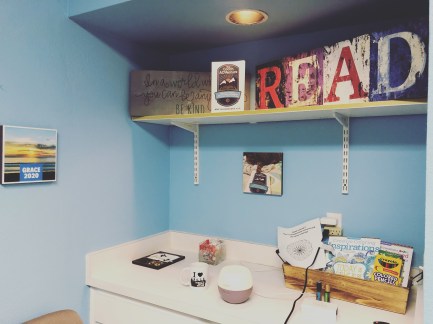
  • mindfulness – I love that #onedayhh forced me to pause and take notice of my surroundings and what I’m doing throughout a work day. The picture below is my favorite nook in my office, but I’ve never taken a picture of it before. My word of 2020, grace, holds a special place in this nook.

  • community – One of the best parts of the day is scrolling through the #onedayhh hashtag on Instagram. Social media can be a dumpster fire of negativity and garbage most days, so it’s nice to have a day where you see positive messages, and a glimpse into the regular lives of regular people around the world.  Many Zoom meetings were shared!

  • creativity – I had to consciously decide what to take a picture of, what I wanted to share, and how to craft the caption to go with each picture. I was more intentional throughout my day because I had sparks of ideas for pictures that I wanted to capture. I also love seeing how and what other people choose to share. I worked hard to break my 10,000 step goal and I ended up crushing it!


These are just a few of the pictures I shared. To see more, check out #onedayhh on Instagram to see the fun and be sure to follow Laura Tremaine so you can join in next year. I appreciate that one person’s creativity led to day of people sharing their small joys on social media.

Posted in Reflection | Tagged , , , , , , | Leave a comment

Coaching for Equity Reflections

I just started reading the latest book by one of my educational heroes, Elena Aguilar. Coaching for Equity: Conversations That Change Practice brings together two of my favorite educational topics – instructional coaching and equity. All I’ve read so far is the introduction and I already love the work and can’t wait to dig in deeper. As a natural coach, Aguilar ends each chapter with some reflective questions for the reader to consider. I’ve decided to blog my answers here for the intro, and I hope to continue it for future chapters as I read. I’ve paraphrased the questions for my reflection here.

Why are you reading this book?

I am reading this book because I love all of Aguilar’s work, and I am currently leading equity work in my own system.

What do you fear about reading this?

One of my fears anytime I am reading a professional book is my own insecurities. I often read professional books and highlight and flag one million ideas that I want to do, or that I end up beating myself up about for not thinking of doing. Also, I often end up feeling guilty that I don’t blog as much as I want to or used to. Maybe reflecting on this book will give me something to blog about more frequently.

What do you hope to learn?

I hope to learn more about myself, knowledge about how others are coaching through equity and knowledge to positively impact staff and students. Equity work is complex, but I know that it always has to start internally first. I want to model the learning and self-reflection required of us all to move equity work forward.

What are your hopes for the future?

I hope that educators can move from hopes and wishes to enacting policy changes and taking actions that will close the opportunity gap, support all students, and provide an equitable education for all learners.

I have previously blogged about every chapter Aguilar wrote in Onward: Cultivating Emotional Resilience in Educators in another blog series.

Posted in Reflection | Tagged , , , , , | 14 Comments

Happy 1st Anniversary to The Coach ADVenture!

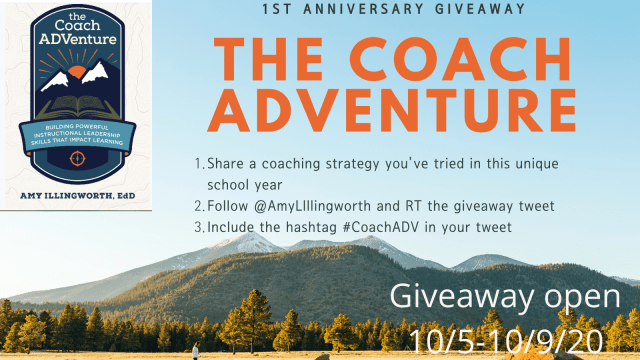
My book turns one this week!  In honor of the one year anniversary of the publishing of The Coach ADVenture: Building Powerful Instructional Leadership Skills that Impact Learning, I am holding a giveaway on Twitter this week. Join in on the fun over at #CoachADV this week!


The Coach ADVenture: Building Powerful Instructional Leadership Skills that Impact Learning is available for purchase on Amazon and Barnes & Noble.

Posted in Reflection | Tagged , , , , | Leave a comment

September 2020 Reading Update

In September I read a lot more than I have been, and an interesting range of books.  I keep a never-ending list of recommended books, so I also have something to look for when I need a new book.  Here is what I read this month:

    All Adult Here by Emma Straub – I loved this book! I needed a fun, well-written read about great characters! I appreciated how the author was able to weave in natural storylines that included transgender and LGBTQ ideas. The characters were believeable, flawed, and likeable.
    Party of Two by Jasmine Guillory – This was a fun romantic comedy! Olivia and Max, an unlikely duo, fell in love and created a semi-long distance, interracial relationship. I appreciate a love story where the woman is as successful as the man, and where she doesn’t have to give up her dreams to be with a man.
    Four Seasons in Rome: On Twins, Insomnia, and the Biggest Funeral in the History of the World by Anthony Doerr – A friend who loves to travel and read as much as I do recommended this book. It’s a love story about Rome, and a young family’s yearlong adventure living there. It made me look back through my photos from a 1999 trip to Italy, and it made me long for the end of this pandemic and a time when I can book international travel again. I loved much of the description of the city, the nature, and the people of Rome, though lengthy description is not my favorite. In fact, I couldn’t get through an audio version of one of the author’s novels because of his lengthy description. I enjoyed this, I think, because of my love of travel and my memories of Rome.
    Love Lettering by Kate Clayborn – I think I read about this book on a recommended books for summer list, back in the spring. I needed another fun romantic comedy for some light weekend reading. The story of Meg, an artist who loves lettering, and Reid, a stuffy math nerd, walking all around NYC to find hand-lettered signs, was so much fun! This made me want to go on a walk to find my favorite letters, to play the games they played with signs as they got to know each other. This was a sweet story with a few turns that made for richer characters.
    The Last Flight by Julie Clark – I’m not sure where I heard about this book (I think a blog post), but I’m so glad I found it! This was a fun, fast-paced mystery about two women trying to escape their lives and the negative circumstances they were in. Switched flight tickets, disguises, secrets, and lies, as we learn more about the past of each woman and what drove her to abandon her life. Great read!
    Hidden Valley Road by Robert Kolker- this was a non-fiction recommendation from Laura Tremaine. It is the life story of a family with 12 children, six of whom developed schizophrenia. It was a fascinating story about a troubled family, before mental illness was a regular topic of conversation, and it also dealt with the scientific research around identifying and treating schizophrenia.

Life Will Be the Death of Me

    by Chelsea Handler [audiobook] – I have listened to some of Handler’s books before, and they are always an entertaining mix of celebrity gossip, family stories, and comedy.  This one was a bit different because it chronicles Chelsea’s time in therapy, as she was devastated after the 2016 election and finally able to grieve the death of her brother 30 years earlier.  Despite the heavy topics, she adds levity with dog stories, the making of her drug documentary and drug line, and more silliness. She shares the value of going to therapy, of listening more, and getting out of our echo chambers. 

This year I’m also keeping track of the stats of the books I read. Here are August’s stats:

Fiction: 5

Nonfiction: 2

Young Adolescent: 0

Audiobooks: 1

Author is of or plot addresses a different race/ethnicity, orientation, religion than me: 1

Female author: 5

Male Author: 2

Nonbinary Author: 0 (I have gotten one recommendation, but I haven’t read it yet!)


Posted in Reflection | Tagged , , , | 1 Comment

August 2020 Reading Update

I hit another reading wall this month. I think it was a combination of more work reading as we opened up a new school year (virtually), more stress, and more time outside when I wasn’t working. Also, I am enjoying so many podcasts that I’m not listening to audiobooks often right now.

This month I read:

  • **White Fragility: Why It’s So Hard for White People to Talk about Racism by Robin DiAngelo – Last month I purposely read Me and White Supremacy, by a Black author, before I read this book, by a white author. It was interesting to me how the books read and felt so different, while covering basically the same idea. I think both books are equally important and I believe all white people should read both. DiAngelo, as a white woman, is able to see to others about the reality of growing up socialized into white supremacy, and how to begin to interrupt racism in our everyday lives. I appreciated her examples, yet I found a lot of them hard to read – either because I’ve experienced the examples myself, seen others say or do what she captured as I sat silently by, or it was sad to see how much farther we still have to go. At this point in our country, it is inexcusable to be unaware of the systems of white supremacy all around us. There are more than enough resources to educate ourselves (without putting that burden on BIPOC to do the work for us), and it’s time to break the white solidarity and speak up about injustices. This work is not easy, and you feel uncomfortable, you are most likely moving in the right direction.
  • The Vanishing Half by Brit Bennett – I loved this book! Everyone has been talking about it recently, and it did not disappoint.  Twin sisters Desiree and Stella are Black young women, who live in a town of light-skinned Black folks, some of whom can pass as white. They leave their small hometown to create a new life, and then end up leading very different, separate lives; one as a Black woman and one as a white woman. I loved how the author wove elements of the story across time, not telling the story in a linear fashion, nor through only one character’s perspective. There are a lot of wonderful, flawed women in this story, full of secrets and hurt. It was beautifully told.
  • Deacon King Kong by James McBride – This book is a character-driven book full of interesting, flawed humans living together in New York, dealing with crime, secrets, family, love, loss, and betrayal. The talented author (who I’m not sure I’ve ever read before) is a beautiful writer. The character of Deacon is an old alcoholic widower who has gone hill after his wife’s passing. He interacts with all the neighborhood’s characters, gets into trouble, and helps find missing items and memories in the process.  While I’m glad I read it, I also realized that I much prefer plot-driven novels to character-driven. Similar to reading something like Olive Kitteridge by Elizabeth Strout, which I am glad I read but I didn’t devour like I would a fast-paced mystery. It’s good to know these things about yourself as a reader.

This year I’m also keeping track of the stats of the books I read. Here are August’s stats:

Fiction: 2

Nonfiction: 1

Young Adolescent: 0

Audiobooks: 0

Author is of or plot addresses a different race/ethnicity, orientation, religion than me: 3

Female author: 2

Male Author: 1

Nonbinary Author: 0 (I have gotten one recommendation, but I haven’t read it yet!)
Posted in Reflection | Tagged , , | 2 Comments

July 2020 Reading Update

This month was a balance of summer fun reading and ensuring I was continuing to educate myself. In July I read:

  • Big Summer by Jennifer Weiner – This was another “good summer read” recommended a few months ago that just became available on my library e-reader. I haven’t read a Weiner book in a few years, and at first I was annoyed and felt that I had finally outgrown her. The characters all still seem to be 20-something women with low self confidence, with weight issues, with parent issues, with not-yet-fully-formed careers, struggling with men. However, there was a bit of mystery and some fun mixed in, so I stuck with it. Daphne and Drue were high school friends until Drue’s true colors finally hurt Daphne enough to end the friendship, and begin her social media influencer lifestyle. When Drue returns out of the blue and asks Daphne to be a bridesmaid in her wedding, it was ridiculous that Daphne agreed.  Once I got past that, I was able to enjoy the insane wedding details, the cute romance elements, the nice family and friendship stories, and to get to the bottom of the mystery. Not my favorite by a long shot, but a quick summer read for sure.
  • Stealth by Stuart Woods – Every few months I check for a new Stuart Woods book; sometimes I find I missed one (though I try to read the Stone Barrington series in order).  I always enjoy the fast-paced mysteries that Stone gets himself involved in. This time, his CIA buddy Lance Cabot recruits him to become a CIA Deputy Director, instead of just a consultant. This leads to attempts on his life and a near-death experience (with some romance along the way). Another fun read!
  • Stamped: Racism, Antiracism, and You by Ibram X. Kendi and Jason Reynolds [audiobook] – After reading Kendi’s How to Be an Antiracist last month, I looked back at his previous books. I decided to read this YA version of his adult Stamped book, to see how the message plays out for students. I also decided to listen to it, and I’m so glad I did because Reynolds, who is a great children’s author, narrates the audiobook and his reading is incredible!  They call this a not history history book, and they take you through hundreds of years of American history – the real history of Black America. If I was still a middle school teacher, I would be planning to read this with my students in the coming school year. This is one of many ways we can adjust our curriculum and help young people learn things that many adults are just now learning around our country.
  • Mañanaland by Pam Muñoz Ryan [audiobook] – I loved this book! I love this author, and her gift for beautiful storytelling with rich, vivid language! I had the amazing opportunity to join a 4th grade class on a Zoom call with the author back in May. She shared about her writing process and a little about her latest book, so I immediately had to download it. I listened to it on a recent road trip. Young Max’s story of searching for details about his mother, wanting to be a soccer star, and wishing his father would see how grown up he is, was a sweet story. This is another book I would put in my classroom library if I was still a teacher (and if we were back in regular school!).
  • Treason by Stuart Woods – Once I get back into a Stone Barrington kick, I read a few of these stories in a row. I love that I’ve been reading this series long enough to know all of the main characters, their characteristics, and I can look forward to a random adventure, especially now that Stone works more directly for the CIA. The only disappointment in this book is that it ended with a cliffhanger, which is not usual for a Woods novel.
  • Me and White Supremacy: How to Recognise Your Privilege, Combat Racism and Change the World by Layla Saad – This is another book in my self-education, that I highly recommend to all White people. This book is really meant to be a self-reflective practice, with the reader journaling answers to questions at the of each chapter. The book is designed to be read one day at a time for 28 days, providing enough time for reflection. I wrote a lot in the beginning, and then began to do more thinking and less writing as it went on, just because I wanted to finish the book! The author recommends you go back and reread and respond to the questions over and over as you learn more, so I will plan to do that again in the future. Reading this not only gives you an understand of the key elements of white supremacy, but a deeper understanding of your own role in the system. It’s hard work to consider how you have harmed BIPOC in your life, but if you don’t start the work with yourself, you cannot contribute to dismantling white supremacy.
  • When We Believed in Mermaids by Barbara O’Neal – I love discoverng new-to-me authors whose writing style I enjoy! I can’t remember how I found this book, but I loved the bittersweet story of Kit, Josie, Dylan, and their dysfunctional childhood, and how that impacted their lives as adults on different continents. It was a beautifully told story and I really want to visit New Zealand now!

This year I’m also keeping track of the stats of the books I read. Here are July’s stats:

Fiction: 5

Nonfiction: 2

Young Adolescent: 2

Audiobooks: 2

Author is of or plot addresses a different race/ethnicity, orientation, religion than me: 3

Female author: 4

Male Author: 3

Nonbinary Author: 0

Posted in Reflection | Tagged , , , , | Leave a comment

My blog is 8 years old today!

Each year in July I like to celebrate the birthday of my blog (see 1st2nd, 3rd4th, 5th , and 6th birthday posts). I’m not sure why I didn’t write a post last year, but I imagine my mind was in other places since I was two weeks into a new job, learning lots! I love reading back through those posts and seeing how far I’ve come. Back in 2012-2013 I wrote about someday possibly writing a book about coaching teachers.  In October of 2019 my book, The Coach ADVenture, was published!

Rereading the list of all the places I traveled between 2012-2018 made me both happy and sad. Happy because I LOVE traveling and I have fond memories of all of those trips; sad because we are currently living in a global pandemic and I have no plans to get on an airplane for any major trip anytime soon.

Since July 2018 when I last capture some blog milestones, here is what’s been on the blog:

  • My word of 2019 was shine (and it came through often, and when I needed it!)
  • My word of 2020 is grace (and it made itself known me in 2019 and has been exactly what I needed this year!).
  • I spent all of 2019 rereading and reflecting on Elena Aguilar’s Onward, focused on educator resiliency
  • I read 89 books in 2019!
  • I started a Green Schools blog series (and then paused it when COVID-19 hit!)
  • I spent a lot of time on Instagram during quarantine, documenting my daily neighborhood walks
  • I completed the ACSA Superintendent’s Academy
  • I started a new job in a new district (and then learned how to lead by working from home during a global pandemic!)
  • To continue the travel list, since July 2018, I have traveled to:
    • Cabo San Lucas, Mexico
    • Las Vegas, Nevada (multiple friend trips)
    • Oakland, CA (multiple family trips)
    • Sacramento, CA (ACSA work)
    • Grenada (annual Caribbean girls’ trip)
    • Lincoln, Nebraska (concert #3 of the summer of ’19)
    • Hawaii
    • Victoria, Canada
    • London, England
    • Iceland
    • Cupertino, CA (to visit Apple)

I love having this blog, knowing there is a place I can capture my monthly reading and my random reflections, keeping a history of where I’ve been and what I’ve been doing. As always, looking forward to more of this writing journey. Thanks for coming along!

Amazon Rainforest Fires Update


Posted in Reflection | Tagged , , | 5 Comments