Connecting with Purpose

October is Connected Educators Month. If you know nothing about it at all, I suggest you read here or here. I also find this post by Steve Anderson (@web20classroom) very informative. I first heard about this last year (mid-August, so half way through the CE month last year) and enjoyed the blogs and articles I found to enhance my learning. Being even more connected myself this year, I felt the need to contribute some reflections about the process and benefits I get from being connected. I work with and know many hard-working people who truly don’t believe they have the time (or the technology skills) to be a connected educator. I believe they would benefit SO MUCH from being more connected, if for nothing more than the fact that the more connected you are, the easier it is to find resources. In fact, I wanted to know what the twitter hashtag for this year’s Connected Educators Month was so I tweeted the question out to my PLN.  Within 30 seconds @jswiatek had responded.

  1.  ‏@DirectorAmy Is there a specific hashtag for Connected Educator Month in October? #edchat
  2.   ‏@jswiatek  @DirectorAmy #cem is the official hashtag for Connected Educator Month.

(I have since seen #cem13 as well!)

Some of the ways in which I connect with my fellow educators include:

  • Twitter
  • Edmodo
  • Blogging –  writing,  reading, and participating in challenges
  • Pinterest
  • Book Clubs (virtual and in person)
  • Email
  • LinkedIn

Two of my favorite ways to use twitter to connect and learn are hashtags and lists. I believe that both of these features are underutilized by many twitter users and can help newbies build a useful PLN quickly.

HASHTAGS (#)

Hashtags are a way to mark specific topics within your tweet, in order to connect to others with similar interests. Hashtags are also used for twitter chats. Twitter’s help center gives an explanation here. Not only do I enjoy participating in twitter chats, but I have found so many more relevant connections and resources through my use of hashtags. When I am looking for support regarding a coaching issue, I type #educoach into the search box and I am instantly connected to fellow coaches sharing resources. When I want to know what current and future leaders are thinking and sharing, I review tweets posted under #satchat and #satchatwc. When I need something specific, I try various searches to see if there are relevant hashtags to the topic I am searching.  I have discovered many new topics and people worth following this way.

# Hashtag search

# Hashtag search

LISTS

Lists are one of my favorite features on twitter (info from the help center). As my PLN has grown, it has become increasingly complicated to keep up with the great ideas shared day and night across the globe in my twitter stream. By creating lists I am able to group the people I follow into smaller, more manageable sets. The more proficient I have become at creating and using lists, the more purposeful my lists have become. I create lists for people within my district, people who teach, who are administrators at the site, district, or county level, authors, bloggers, and whatever else seems relevant to me. Rather than spending time trying to read and digest my never-ending twitter stream randomly, when I dedicate time to my personal learning on twitter, I focus on one of my lists.  This has helped me read new blogs, find even more great educators to follow, and prioritize my learning.

*Updated in 2016- I turned my lists into columns on Tweetdeck, for even more purposeful use of Twitter for resources! 

Twitter lists

Twitter lists

How do you use hashtags or lists to enhance your time on twitter?

How are you a connected educator?

Engaging the Unconected

I’d love to hear from you in the comments and on twitter to continue my learning!

Posted in Reflection | Tagged , , , , , , | 9 Comments

Purposeful Close Reading

Like so many educational colleagues, I have physical and virtual piles of professional readings about the art of close reading. I am truly enjoying the posts written by Christopher Lehman, Kate Roberts, and those of the contributors to their #Close Reading Blog-a-thon. Bloggers have discussed the ideas of close reading and the concept of the reader being the fifth corner of the text, which I love. As I continue to read and reflect on the ideas out there about close reading, I am haunted by one important word: PURPOSE.

For years one of my closest friends, and former colleagues, teased me about my reading.  Because I finished books so quickly, he was convinced that I didn’t actually read much of anything. He often quizzed me on specific information from those books and when I didn’t remember key details, which was more often than I care to admit, he was more convinced than ever that my speed reading wasn’t leading to actual comprehension. But I always knew the gist of the stories, and I always knew the feeling the books had left with me- whether I enjoyed the experience and would recommend it to my students or peers, or not.

As a reader, I read with a purpose in mind. Or at least, whenever I want to do something with my reading I read with a purpose. My purpose in reading those YA novels quickly as a teacher was to be ready to recommend books of interest to my students at any given point in time. I wasn’t trying to pass a multiple choice quiz nor write an essay in which I closely analyzed the text in great details. This was especially important when I was teaching a group of 8th grade students who had experienced many years of “fake reading” in school and little joy or pleasure out of the act of reading. Even now, as a doctoral student and a district level leader, I read different texts with different purposes.

  • If I am reading an assignment I know we will discuss in class, I read to make meaning of the overall concepts and I annotate my texts to support me throughout a discussion.  I select quotes that resonate with me and I formulate my thoughts about them, so I can speak to them in class. I hope that my peers have done the same so that our discussion can truly be rich and collaborative and lead to new insights for me.
  • If I am reading research articles to see if they will be useful in my review of literature, I skim and scan, looking only at specific sections. If I determine that the article would benefit my research, I then read with a new purpose, ready to summarize the research as it relates to my area of study.

If I am reading a professional book or article, I read with various purposes:

  • To get an overview of a new idea, methodology, research, concept, etc., for my own understanding.
  • To determine if this reading would benefit any of my colleagues (I would share it personally or through one of our meetings).
  • To determine if a team of my colleagues would benefit from a combined study of this text to enhance our collective knowledge.
  • To determine if a program or product is worth considering.
  • To challenge my thinking, assumptions, beliefs, ideas, and to encourage reflection.
  • To learn!

When I think about all of the different purposes I have for reading (and I haven’t even mentioned the fact that I LOVE to read fiction novels for fun outside of work and school!), I worry about schools creating formulaic, procedural methods for close reading. I read closely based on my purpose. Not every purpose involves me dissecting the nuances of the author’s language, nor determining the meaning of an unknown word that didn’t hinder my comprehension. Not every purpose involves me annotating in the same way. As a reader, I make meaning of the texts based on my purpose for reading. The more difficult the text (or the content), the more I employ my own strategies for making meaning (thank you to Stephanie Harvey for reminding us that “the more challenging the text, the more strategic the reader needs to be”). If I was forced to follow the same 2-5 steps of “close reading” with all of the different texts I read, I would lose my mind.  Literally.


Alcatraz

Alcatraz

So I hope that is not what we do for students. I believe that we need to teach our students how to set a purpose for their reading, determine what strategies they need to employ to make meaning, and be prepared to collaborate orally and in writing about their analysis of the texts. I also believe that there are times for specific lessons on reading closely for a teacher-determined purpose, but those should not outweigh student-driven reading.

How are you helping students set a purpose for their reading?  What purposes do you have for reading something closely?Image

Posted in Learning | Tagged , , , | 2 Comments

My Coaching Beliefs

2013-08-05 13.36.41

I have recently been reading  The Art of Coaching by Elena Aguilar. It is a great resource and in fact I purchased a copy for each of the coaches in our district, to use as a book study throughout our work together this year. In chapter three the author goes over her coaching beliefs and encourages us to put our own coaching beliefs on paper. I love these quotes as she sets up the purpose of knowing your own beliefs:

  • “We do not really see through our eyes or hear through our ears, but through our beliefs” (p. 33).
  • “Here’s the thing about beliefs: we all have them and they drive our actions.  We experience our beliefs as truths, and we can usually find evidence to support them” (p 34).
  • “We don’t see things they way they are; we see things the way we are” (p. 35).
  • “I encourage all coaches to articulate the beliefs from which they want to work” (p. 43).

Here is my first second* draft of my own coaching beliefs:

* Come from a place of strengths: We all have strengths and the best way for me to coach is to start from an individual’s strengths.  People are also more willing to hear suggestions and take new actions if a coaching conversation begins by acknowledging the hard work, dedication, and positive elements already in place.

   * Voice and Choice matter: We all learn and grow when we have a say in our learning.  When I coach, I work hard to LISTEN and then to provide an opportunity for teachers to have a voice about their teaching.  I also work to provide choice- there is not just one way to coach, teach, or do something.  The more voice and choice an individual has, the more buy-in he or she has to make a positive change.

   * All must mean ALL: ALL students can learn, all teachers can grow, anything is possible when we all come together as a community.  This means that I coach, learn, and collaborate with a positive belief in those I work with and for.  This also means that I have to challenge statements and actions that go against a belief in the success of ALL. 

   * Life-long learning: All of my work is grounded in the belief that we are all life-long learners.  I do not believe that I have all of the answers, but I am committed to learning new information whenever I can.  I strive to model the seeking and cultivating of new learning.  Coaches are leaders on a school site/ at the district level and I believe that a coach can demonstrate true life-long learning in thoughts and actions.      

   * Trust matters: Change does not occur without a trusting relationship present.  As a coach I believe in the teachers with whom I work and I dedicate time to develop trust.  Trust comes from mutual respect, following through on promises, demonstrating competency and a willingness to be open, honest, and imperfect together.  

   * Walk the walk and talk the talk:  I am a coach who is not afraid to get my hands dirty with model lessons, collaborative planning sessions, shared frustrations, shared successes, etc.  A coach is only a coach if they walk the walk MORE than they talk the talk!

   * There is not just one “right” answer:  Coaching is about a process, a journey, and not one specific destination.  In addition, coaching is not about getting someone to my personal belief, but to support them on their journey to be their best self. As a coach I work to help others find their best processes along this journey.

These were my initial reflections after reading this chapter. I plan to revisit these statements throughout the year and make revisions as needed. While these are not set in stone, I know that my beliefs drive my actions each and every day. When I coach, these statements are what hold me accountable to being the best coach I can be. I think it is important for every leader to reflect on their own coaching beliefs. True instructional leaders are coaches and we must take advantage of each coaching opportunity we are given.

What are your coaching beliefs?

2013-09-07 20.45.24

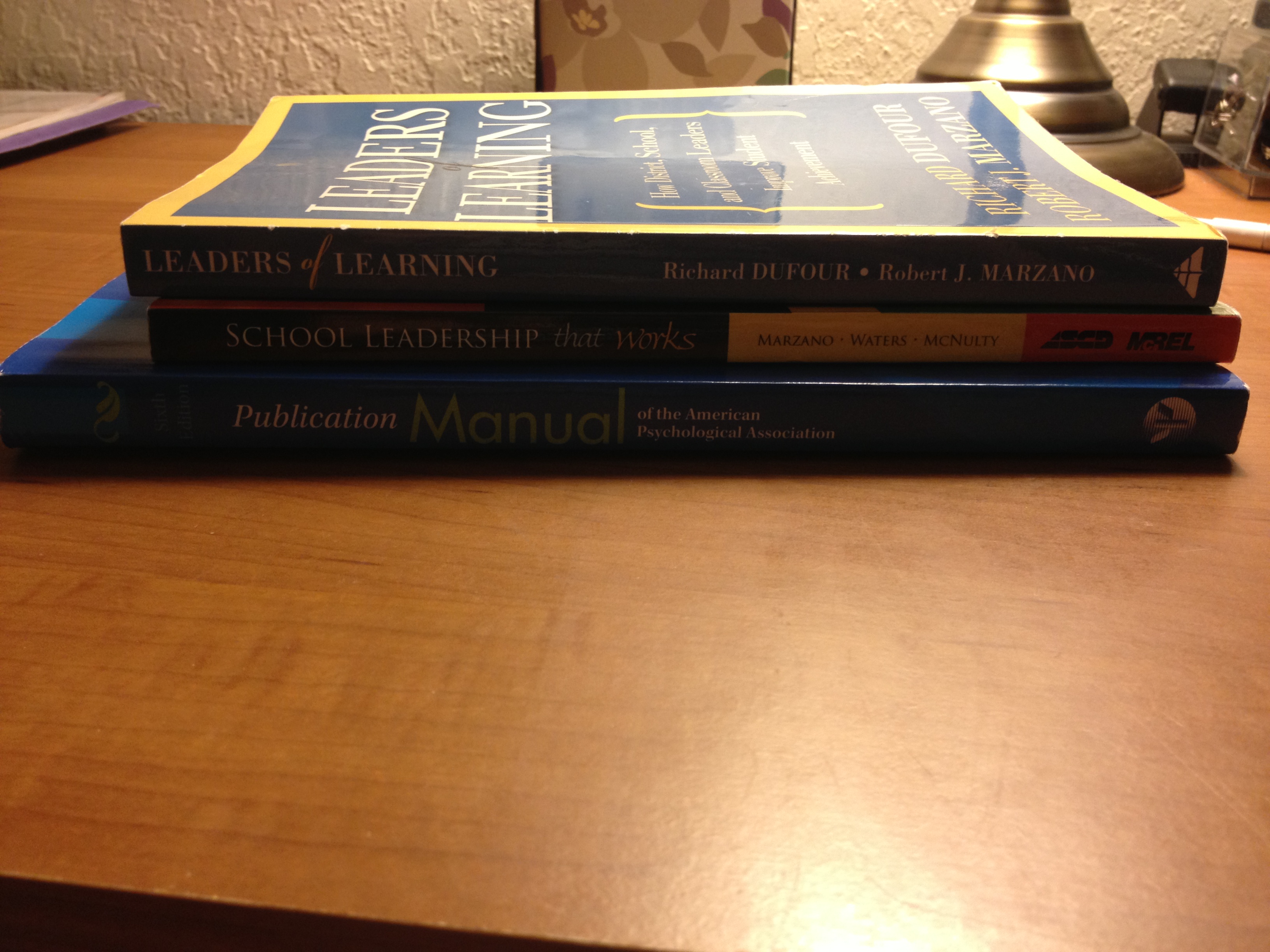
Do your actions match your beliefs? If your beliefs were stacked up next to your actions, would they stand strong or topple over?

*Revision note: After reflecting on Carol’s coaching questions in the comments, I made some revisions to my coaching belief statements.  Thank you Carol for pushing my thinking!

Posted in Leadership, Reflection | Tagged , , , , , , , | 10 Comments

How is it September already?

It is hard to believe that it is already September. I work in a modified year-round school district and we have already completed five full weeks of school. In another three weeks we will be on our Fall Break. Where has the time gone?!

2013-08-31 19.14.55

Before I blink and see October on my calendar, I wanted to take a moment to STOP and THINK. During the month of August I participated in something called August Break 2013. I had never heard of this until, on August 1, I was reading one of the education blogs I enjoy [this blog by Lisa (@TeachingwithSoul)]. The August Break was created by Susannah Conway and you can read all about it here. Basically, it’s a blog/ picture challenge. The August Break allows you to take a break from writing/ blogging while looking at life a little differently, through a camera lens. You post pictures… one a day or as many as you want throughout the month. I had never done something like this before so I decided to challenge myself and join the break.

During this time I learned a few things that I want to share:

  • Associating pictures with words can take time, effort, reflection, and serious connection-making
  • Posting pictures can be very personal
  • Telling a story through pictures is often as challenging as, if not more so, telling a story through words
  • Readers can closely view just as well as they can closely read (nice learning for primary teachers trying on the concept of close reading for Common Core-related instruction!)
  • Pictures can inspire writers/ writing
  • Sometimes you have to look at something differently to truly see it

I enjoyed participating in this challenge and will continue to post my own personal pictures as part of my future blogs. I may even return to some of those August pictures and turn them into blogs with words…

Image

Posted in Reflection, Writing | Tagged , | Leave a comment

Sunday Morning

Throughout this month I’m participating in the August Break 2013.  Today is day 25 and the theme is Sunday morning.  Here is a glimpse into my typical Sunday morning.

Image

2013-08-25 09.45.282013-03-24 12.02.19

Posted in Uncategorized | Tagged , , | Leave a comment

Can you hear it?

Throughout this month I’m participating in the August Break 2013.  Day 24’s word is hear, which is interesting when you think about the fact that you are viewing pictures.  Can you hear the pictures below?

2013-08-24 13.19.402013-08-24 13.21.222013-08-24 15.56.34

Posted in Uncategorized | Tagged , , | 2 Comments

White

Throughout this month I’m participating in the August Break 2013.   Day 19’s suggested word was white.  When I first thought about white, I thought about the way writers use white space

to make their writing

speak to their audience.

But since this is supposed to be about pictures, not written blogs, I will share some views of white…

ImageImage

photo

Posted in Reflection | Tagged , | Leave a comment

Looking Down

Throughout this month I’m participating in the August Break 2013.  Day 18 is about looking down.  It’s amazing how many different ways you can think about looking down.

IMG_20352011-10-07 07.50.012011-10-07 07.45.33


2013-08-18 13.52.082013-08-18 17.02.26

Posted in Reflection | Tagged | Leave a comment

Day 15: Books

Throughout this month I’m participating in the August Break 2013. I LOVE books! 🙂

2013-08-15 11.58.27 2013-08-14 18.37.16

Posted in Reflection | Tagged , , | Leave a comment

Enjoy the stillness

Throughout this month I’m participating in the August Break 2013.  Day 14 suggested we notice stillness.  Image


2013-08-14 14.03.13 2013-08-14 14.08.49

Posted in Reflection | Tagged , , | Leave a comment